What Are Peripheral Nerve Blocks?
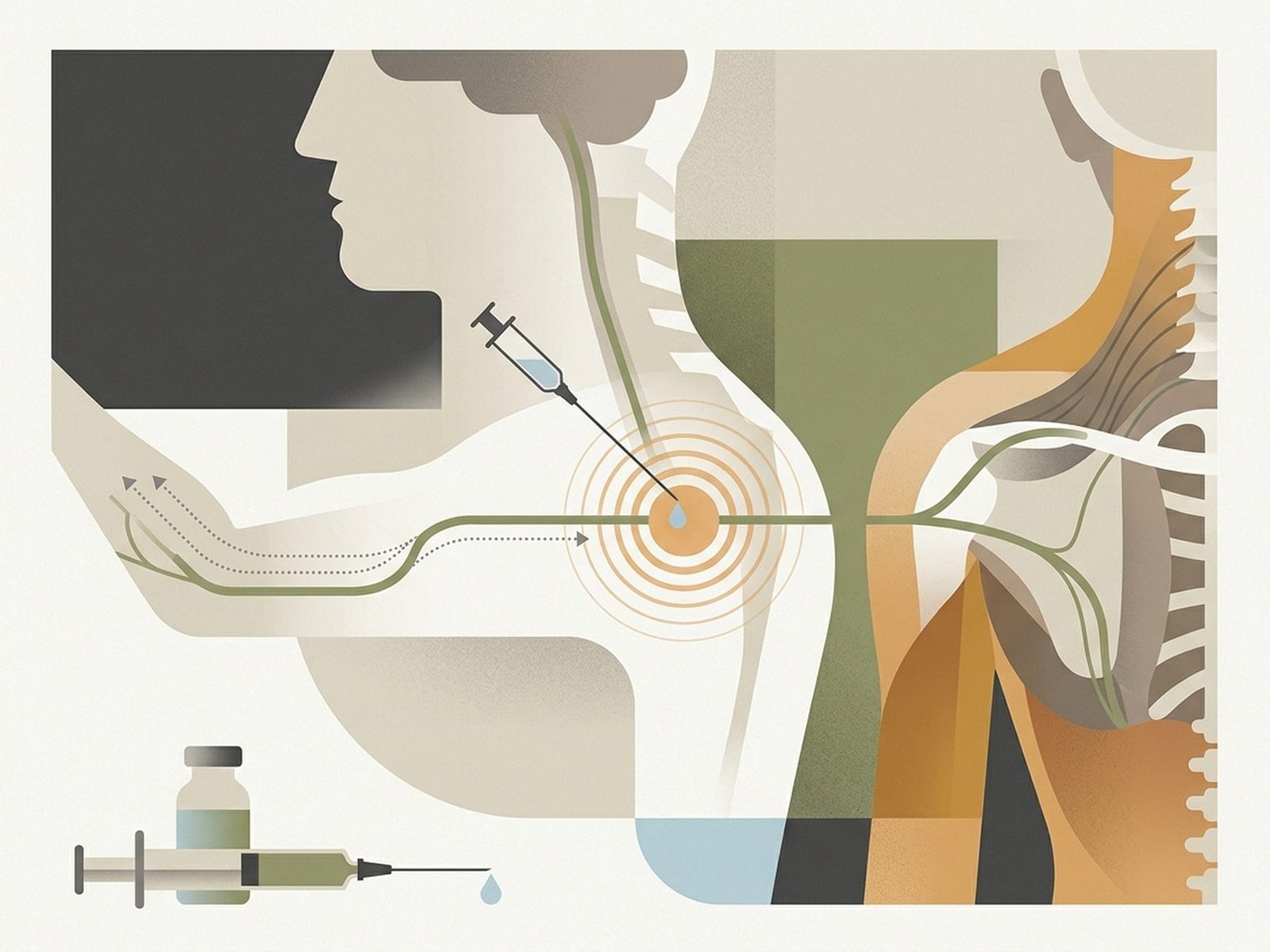
Peripheral Nerve Block
Overview DiagramPeripheral nerve blocks are clinician-performed injections that temporarily reduce signaling through a selected peripheral nerve using a local anesthetic. In myofascial pain care, their value is often as much diagnostic as therapeutic.
This matters because myofascial pain and neural pain often overlap. Trigger points can irritate or coexist with nerve-related pain, while nerve irritation can increase muscle guarding and perpetuate trigger points. A selective block can help clarify how much of the pain is traveling through a given nerve pathway.
A good nerve block is not just about pain relief — it is about answering the right diagnostic question.
Modern nerve blocks are commonly performed with ultrasound guidance. This improves safety and accuracy and helps the clinician place the medication where it is intended without treating the procedure as a blind technique.
Key Block Types for Myofascial Pain
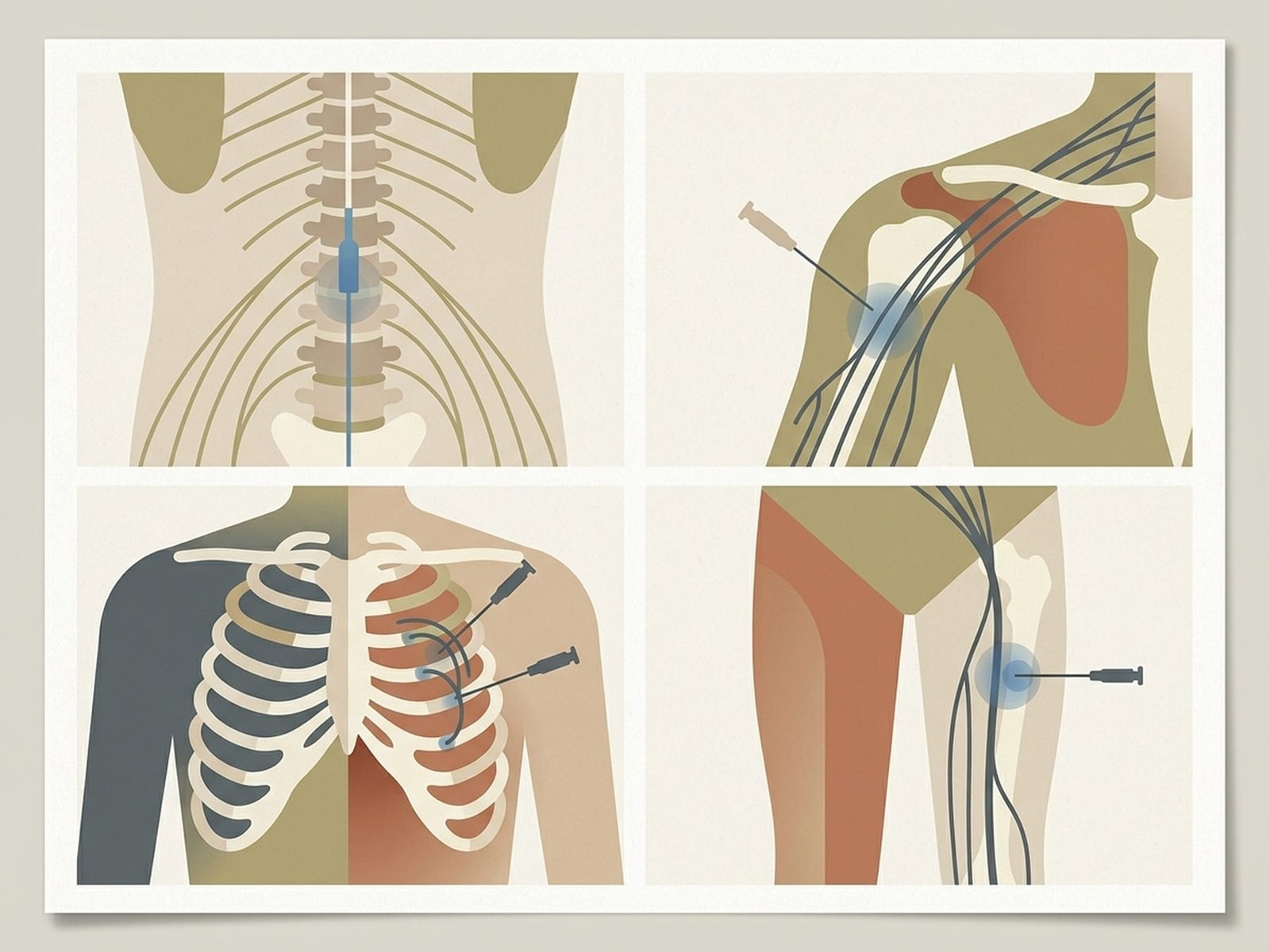
Peripheral Nerve Block Types
Anatomy ChartGreater Occipital Nerve Block
Indication: Selected posterior head and neck pain patterns
Technique: A clinician-performed image-guided block may be considered in selected headache or cervicogenic pain presentations.
- Sometimes used when posterior head pain may be mediated by the greater occipital nerve
- Can help distinguish some neural headache patterns from purely myofascial pain
- May be useful when upper cervical and suboccipital pain overlap strongly
- Best interpreted within the full clinical examination rather than alone
- May be diagnostic, therapeutic, or both depending on the case
Suprascapular Nerve Block
Indication: Selected chronic shoulder pain presentations
Technique: A clinician may use image guidance to block the suprascapular nerve in selected shoulder cases where neural involvement is being considered.
- Can be relevant when shoulder pain has a mixed joint, myofascial, and neural pattern
- May help clarify how much of the pain is traveling through the suprascapular pathway
- Sometimes used in difficult-to-sort shoulder pain cases
- Can create a temporary reduction in pain that helps the next treatment step become clearer
- Should not replace careful shoulder examination
Intercostal Nerve Block
Indication: Selected chest wall pain patterns after serious causes are excluded
Technique: A clinician may consider an intercostal block in selected chest wall pain cases after cardiac, pulmonary, and other urgent causes have been ruled out.
- Chest wall pain can be diagnostically challenging, especially when muscular and neural components overlap
- A temporary block may help determine whether an intercostal nerve pathway is contributing significantly
- May be relevant in selected post-surgical or chronic chest wall pain states
- Requires careful procedural judgment because this is a higher-risk region
- Best used after appropriate medical triage rather than before it
Lateral Femoral Cutaneous Nerve Block
Indication: Selected anterolateral thigh pain or meralgia-type presentations
Technique: May be considered in cases where a clinician is trying to distinguish a peripheral nerve irritation pattern from referred myofascial pain in the hip-flexor or lateral hip region.
- Can be useful when symptoms suggest meralgia paresthetica or a similar overlap pattern
- May help clarify whether symptoms are more nerve-mediated or more myofascial
- Often interpreted alongside regional muscle findings rather than separately
- Useful only when the diagnostic question is clear
- A positive response still needs to be integrated with biomechanics and load management
Sciatic Nerve Block
Indication: Selected deep gluteal, piriformis-related, or pseudo-sciatic pain presentations
Technique: A clinician may consider a sciatic nerve block when there is uncertainty between spinal, gluteal, and peripheral sources of leg symptoms.
- May help separate deep gluteal or piriformis-related pain from other pain generators
- Can support diagnostic clarification in complex leg pain presentations
- May help determine whether the sciatic pathway itself is a major pain mediator
- Usually considered after clinical examination has already narrowed the possibilities
- Should not be presented as routine care for all sciatica-like pain
Mechanism of Action
Peripheral nerve blocks are useful because they temporarily quiet a specific pathway. That can reduce pain, but just as importantly, it can clarify diagnosis.
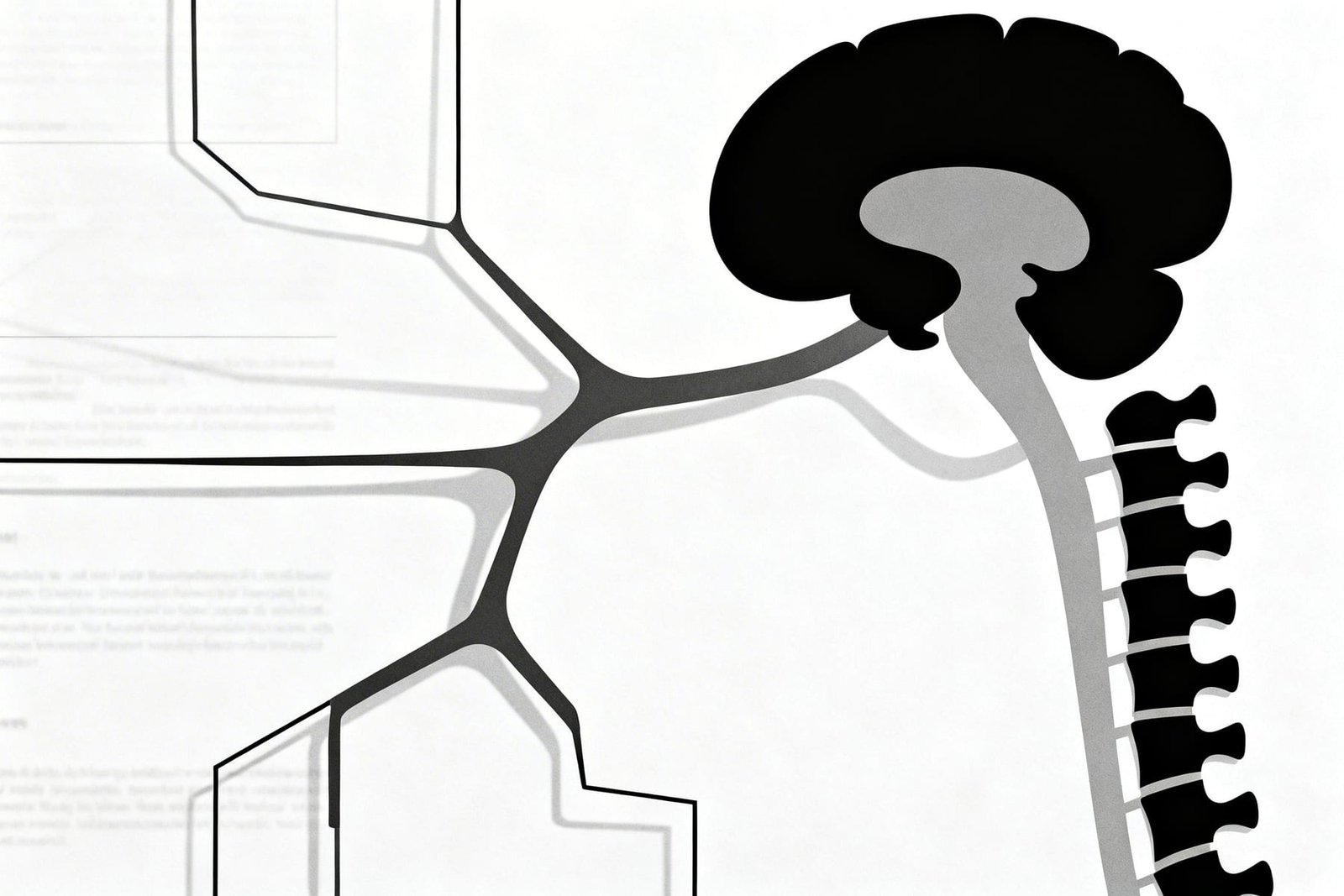
Peripheral Nerve Block
Mechanism DiagramTemporary Interruption of Pain Signaling
Reduction of Local Neural Irritability
Diagnostic Clarification
Possible Central Downregulation
Quiet a Nerve Pathway
They temporarily reduce signaling through a selected peripheral nerve.
Clarify the Diagnosis
The response helps show whether the nerve is actually a major pain pathway.
Support Rehabilitation
Short-term relief may help movement and therapy become more tolerable.
Redirect Treatment
A block can help confirm or rule out a nerve-driven explanation.
The Dual Role: Diagnostic & Therapeutic
Point 01
Point 02
Point 03
Point 04
Point 05
What the Procedure Usually Involves
Clinical Assessment & Indication
Consent & Safety Review
Image-Guided Planning
Clinician-Performed Injection
Short-Term Reassessment
Treatment Planning Based on Response
Broader Integration
Clinical Evidence
Greater Occipital Block Literature
Suprascapular Block Literature
Sciatic / Deep Gluteal Diagnostic Use
Ultrasound Guidance Evidence
Clinical Decision Impact
Summary
Ideal Candidates
Chronic MPS with Suspected Nerve Entrapment
Diagnostic Uncertainty Between Neural and Myofascial Pain
Patients Who Have Failed Conservative Myofascial Therapy
Pre-Surgical Decision Making
Chest Wall Pain Requiring Differentiation
Contraindications & Risks
Risks & Safety Considerations
Medical ProcedurePeripheral nerve blocks are medical procedures that should be performed only in appropriate clinical settings with the right monitoring, equipment, and emergency preparedness.
Nerve Injury
Local Anesthetic Systemic Toxicity
Infection
Hematoma Formation
Temporary Motor Weakness
Peripheral nerve blocks are clinician-performed procedures that may help distinguish neural pain from myofascial pain in selected cases.
Their main value in myofascial pain is often diagnostic rather than purely therapeutic.
Several block types may be relevant depending on region, including occipital, suprascapular, intercostal, lateral femoral cutaneous, and sciatic pathways.
Image guidance improves safety and procedural accuracy.
Blocks are most useful when the clinical question is clear and the result will meaningfully change treatment direction.
They do not replace exercise, manual care, or broader rehabilitation — they help determine how those treatments should be prioritized.