What Gentle Palpation Can Tell You
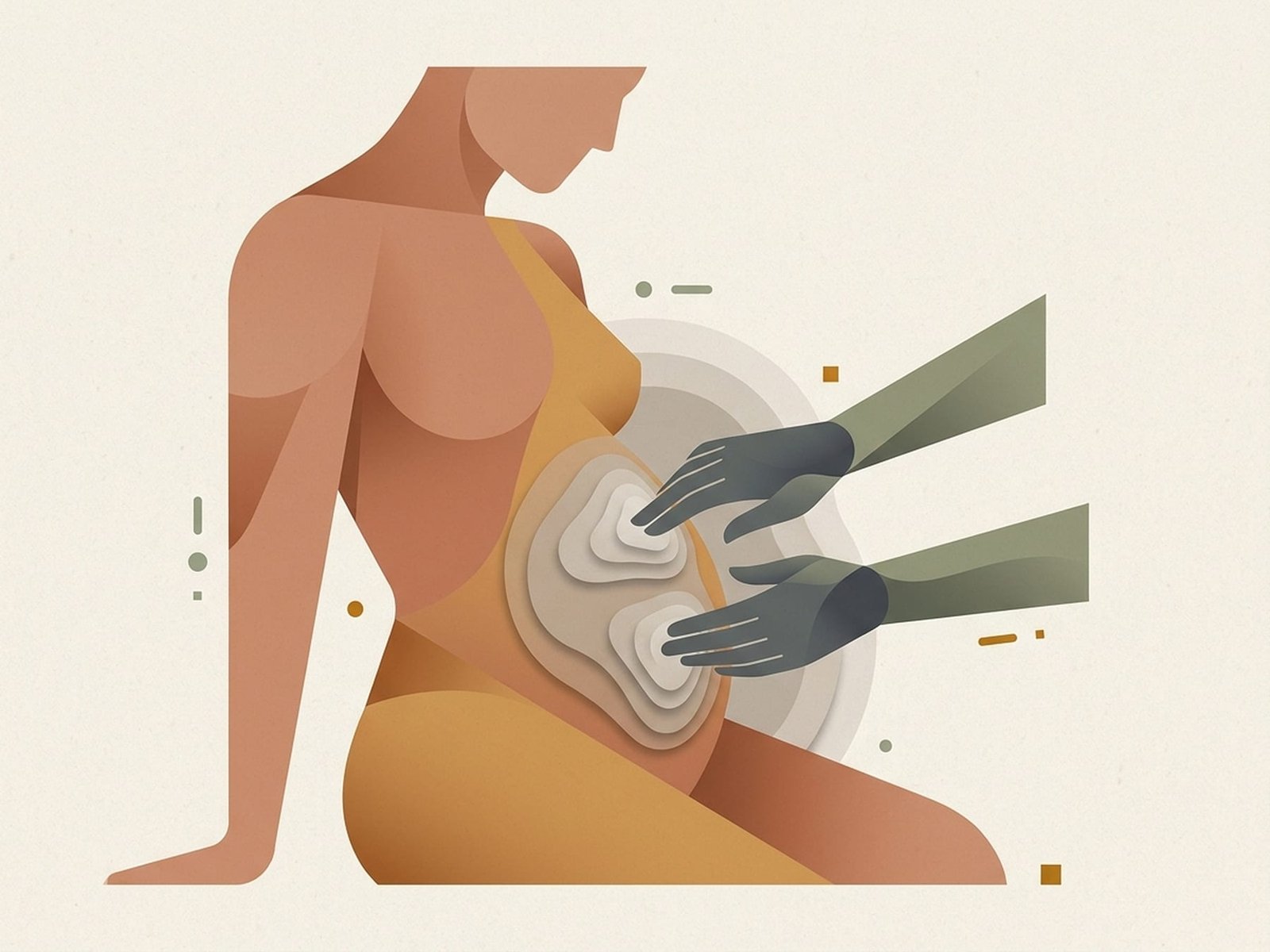
Illustration of flat and pincer contact used in muscle examination
Flat Palpation vs. Pincer Palpation Technique OverviewGentle touch may help you explain where a familiar ache is felt and whether a superficial muscle is sensitive. Start with the symptom and the activity it limits. You do not need to find a knot before you can begin appropriate exercise or seek care.
Palpation is one part of a clinical examination. A clinician combines the history with movement, loading, range of motion and neurological findings, then checks whether muscle contact reproduces the complaint you recognize. Firmness or tenderness alone does not identify the only source of pain.
An atlas shows commonly described locations, while individual symptoms vary. Record what you actually feel rather than trying to reproduce a drawing. No fixed location or distant referral area is required by the international trigger-point consensus.
Self-checking should stay brief and comfortable. If it increases soreness or keeps your attention fixed on symptoms, leave it out and follow a movement-based plan. There is no evidence-based deadline for learning accurate trigger-point self-diagnosis or need for daily tissue monitoring.
Core Palpation Skills
These observations help separate what you can feel from what it may mean. Deep muscles, unfamiliar lumps and areas containing vulnerable nerves or vessels require a different examination approach.
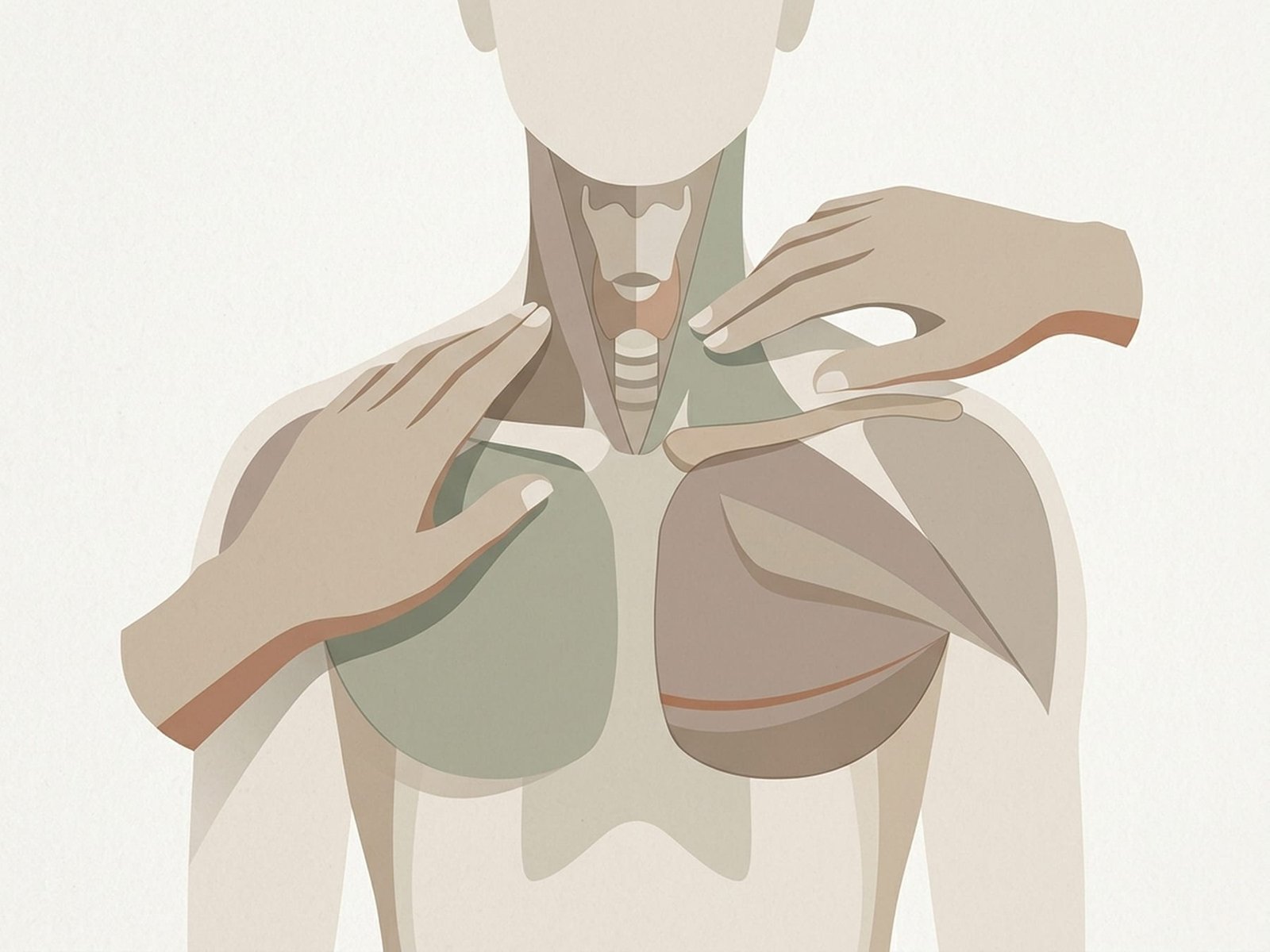
Illustration of palpable muscle findings and reported pain distribution
Taut Band, Nodule, and Referred Pain AnatomyA Band Is One Examination Finding
Describe what is palpableA clinician may feel a firmer strand while moving across a relaxed, accessible muscle belly. A palpable band, focal sensitivity and familiar symptoms contribute to the examination. Tendons also feel firm and move with contraction, so texture alone cannot identify a trigger point. You do not need to pluck a band or produce a twitch.
Tenderness and Comfortable Pressure
Notice the response without chasing painUse light finger-pad contact on a familiar superficial muscle. Notice whether it reproduces your usual ache, then release. A flinch, severe pain or nausea is not a confirmation test. Release immediately for electric pain, spreading tingling or numbness. A pressure pain threshold is a measured examination outcome using a calibrated instrument; a self-rated pain score is not a measure of force.
Recognizing Familiar Symptoms
Record the actual distributionDescribe whether pressure brings on the complaint you recognize, locally or elsewhere, and mark the actual area if useful. The location need not match an atlas. A referral map can orient an examination but cannot confirm the cause or exclude a nerve, tendon, joint or dental problem.
What Touch Can and Cannot Tell You
Separate sensation from diagnosisSkin, fat, muscle, tendon and bone vary in feel with location and position. Soreness or firmness does not show inflammation, fibrosis, tissue damage or recovery by itself. An unfamiliar lump, heat or swelling deserves assessment. There is no established four-to-six-week schedule for learning accurate trigger-point self-diagnosis.
Choose Accessible Areas
Leave deep targets to clinical assessmentAvoid deep pressure in the front or side of the neck, armpit, groin, abdomen or behind the knee. Do not press into a pulsating area or an unexplained lump. Deep hip rotators and quadratus lumborum cannot be reliably isolated by pushing harder through overlying tissue. Avoid broken or infected skin and newly swollen or injured areas.
What the Evidence Supports
The 2018 international Delphi study involved 60 experts and proposed a cluster of a palpable taut band, a hypersensitive spot and referred symptoms. Recognition of the patient’s usual symptoms helps distinguish an active clinical presentation. This is expert consensus, not validation of self-diagnosis. Primary source: https://pubmed.ncbi.nlm.nih.gov/29025044/.
The same consensus says that a fixed trigger-point location or referral area should not be expected. A familiar symptom may be local or spread elsewhere, and its description belongs beside other examination findings. No jump sign, electric sensation or level of pain confirms a diagnosis.
Describe the symptoms you recognize; you do not need to make them match a map.
Palpable Finding
Record a band and focal sensitivity when identifiable
Familiar Symptoms
Ask whether the response matches the usual complaint
Clinical Context
Combine touch with movement and neurological findings
Observation and Functional Review
Use these steps to describe symptoms and follow a relevant activity. They are observations, not diagnostic self-tests.
Choose a Useful Goal
Symptoms and Function Before Touch
Start with the task that matters: turning your head, reaching, chewing or walking. Note the usual pain area and what changes it. Gentle touch is optional; skip it if repeated checking makes you sorer or more worried. Widespread tenderness is a reason to focus on comfortable activity and discuss an individualized plan.
Accessible Superficial Landmarks
A Gentle Orientation Exercise
For upper trapezius, support the forearm and notice the superficial ridge between the outer shoulder and neck without pressing into the neck triangle. For tibialis anterior, sit with the leg supported and gently lift the forefoot to see the muscle beside the outer edge of the shin, then relax before light contact. Stay off the tibial border and use only a comfortable response; no nodule or referral pattern is required.
Make a Symptom Note
Your Actual Pain Pattern
Mark where the usual pain is felt and, separately, where gentle touch reproduced it. Describe ache, burning or tingling in your own words and note whether it settled after release. Do not repeatedly provoke pain to complete the drawing or alter it to match the atlas. Bring the note if it helps explain your complaint.
Review a Daily Activity
Measure Useful Change
Repeat the same comfortable task under similar conditions: minutes of sitting, a shelf reach or ease of eating. A less tender spot can be recorded, but improvement is more useful when sleep, movement or activity is easier. New numbness is not evidence of a successful release.
From Symptoms to a Useful Plan
Choose comfortable contact only where anatomy is accessible. A clinician can help connect the findings to exercise, activity changes or further assessment.
Start With Gentle Observation
A brief check can help you describe a familiar complaint. There is no required daily practice schedule or pressure target.
- Choose one accessible muscle and relax it with comfortable support
- Use broad finger-pad contact; stop at mild, tolerable sensitivity
- Notice familiar symptoms, then release rather than holding until a reaction occurs
- Skip pressure if the area is acutely injured, swollen or unusually sensitive
- Return attention to the activity you want to make easier
How a Clinician Uses Landmarks
The muscle-specific reference gives positioning, nearby structures and examination limits. Clinical palpation is performed alongside movement and loading assessment.
- Upper trapezius: examine the relaxed upper-fiber ridge with the arm supported; distinguish muscle from the anterior neck triangle
- Levator scapulae: locate the scapular spine, then its superior medial border; overlying trapezius limits tissue isolation
- Infraspinatus: locate the scapular spine and infraspinous fossa; compare familiar pain with resisted external rotation
- Masseter: locate the muscle between the zygomatic arch and mandibular angle with a light clench, then examine at rest using a calibrated TMD protocol
- Tibialis anterior: identify the belly lateral to the tibial crest with dorsiflexion, then examine after relaxation
- Piriformis and QL: use deep-anatomy relationships and regional tests; surface pressure cannot determine a needle target
Use Comfort to Support Movement
If gentle contact feels helpful, use its effect to make a daily task easier. Pressure is optional and does not need to produce a tissue release.
- Agree with a clinician on an accessible area if you are unsure of its anatomy
- Keep contact comfortable and brief; avoid forcing pain, a twitch or a flinch
- Release for electric symptoms, spreading tingling or numbness
- Follow with an easy movement, such as a supported head turn or short walk
- Stop repeated pressure if the area becomes more sensitive or daily activity gets harder
Explain the Findings at an Appointment
Your description of familiar symptoms gives the clinician useful context without requiring you to diagnose a trigger point.
- Point to the usual pain and describe the task that brings it on
- Explain whether gentle contact reproduced the same complaint or a different sensation
- Mention tingling, numbness or weakness separately
- Bring a simple symptom drawing if words are insufficient
- Agree on a functional goal and when persistent or changing symptoms should be reviewed
When to Stop and Seek Assessment
Stop pressure when it causes new or spreading symptoms. Do not use a pain response to decide that a structure is safe to treat.
Electric pain, spreading tingling or numbness during pressure
Release immediately. These symptoms may reflect nerve irritation, but their cause cannot be diagnosed from the sensation alone. Persistent or recurrent symptoms warrant clinical assessment; do not simply move deeper or sideways.
Pulsation, an unexplained lump or new swelling
Remove pressure. Do not massage or repeatedly test the area. A clinician can assess its nature; a newly swollen, painful calf needs urgent evaluation, especially with clot risk factors.
Increasing soreness or reduced activity after checking
Stop self-palpation and use comfortable movement instead. More pressure is not a better examination. Review persistent worsening rather than applying another release technique.
Progressive weakness or systemic symptoms
Obtain medical assessment for new weakness, fever with a painful swollen region or significant unexplained symptoms. Sudden severe headache with neurological change, chest pain or breathlessness requires emergency care.
Key Takeaways
Gentle touch can help describe symptoms; it does not establish a trigger-point diagnosis.
You do not need to produce a jump sign, severe pain or a textbook referral pattern.
A clinician interprets familiar pain alongside muscle landmarks, movement, loading and neurological findings.
Use sleep, comfortable movement and daily activity to assess progress. Repeated tenderness checking is optional.
Release pressure for electric pain, spreading tingling or numbness, and arrange assessment if symptoms persist.