What Is Pain Neuroscience Education?

Pain Education
Anatomy and Pain Pattern OverviewPain Neuroscience Education (PNE), also called Therapeutic Neuroscience Education (TNE), is a patient education approach grounded in modern pain science. Rather than focusing only on anatomy or tissue damage, it teaches patients how the nervous system produces pain and why chronic pain can persist.
For myofascial pain patients, PNE helps explain why trigger points may hurt more than expected, why symptoms may spread or persist, and why fear, stress, poor sleep, and beliefs about pain can all amplify suffering.
Understanding pain doesn't just change what patients think — it can change how they respond to pain and how confidently they engage in recovery.
The main message is empowering: pain is real, but it does not always mean the tissues are currently being harmed. That shift in understanding often changes how patients move, think, and engage in treatment.
Core Concepts Taught in PNE
PNE usually teaches a small number of core concepts repeatedly and clearly, using metaphors, examples, and practical application rather than abstract neuroscience alone.
Pain Does Not Equal Damage
Pain is best understood as a protective output of the nervous system, not a perfect readout of tissue injury. You can sometimes have tissue damage with relatively little pain, and you can also have significant pain even when structural damage is limited or not clearly visible on imaging. For myofascial pain patients, this means the pain is real, but it may not always be an accurate measure of current tissue threat.
The Alarm System Analogy
The nervous system works like an alarm system. In acute pain, the alarm is useful and proportionate. In chronic pain, the system can become more sensitive, so smaller inputs trigger a bigger response. The alarm is still real — but the sensitivity may no longer match the actual level of danger.
Central Sensitization
When pain persists, the spinal cord and brain can become more responsive to incoming signals. Harmless or mildly painful inputs may start to feel stronger than they should. This helps explain why chronic myofascial pain can spread, feel disproportionate, or become more reactive over time.
Neuroplasticity: The Brain Can Change
Chronic pain is associated with changes in how the nervous system processes and predicts pain. The important clinical message is that these changes are not fixed. With the right combination of education, movement, rehabilitation, and behavior change, the system can become less reactive again.
The Biopsychosocial Model
Pain is influenced by biological factors such as trigger points, muscle guarding, sleep, and inflammation, but also by psychological factors like fear, catastrophizing, and mood, and by social factors such as work stress, support, and daily demands. A good treatment plan usually needs to account for all three domains.
The Fear-Avoidance Cycle
When pain leads to fear of movement, activity often drops. Less movement then leads to deconditioning, lower confidence, more guarding, and often more pain. Understanding this cycle helps patients re-engage with movement safely instead of treating all pain as a sign to stop.
Threat Assessment and Pain Output
The brain constantly evaluates threat using sensory input, past experience, mood, beliefs, stress, and context. When threat is judged to be higher, pain often feels stronger. When threat is reduced, pain often becomes more manageable. Education can reduce this threat load by giving patients a more accurate understanding of what pain does and does not mean.
How PNE May Reduce Pain
PNE appears to help by reducing threat, improving self-efficacy, lowering catastrophizing, and making graded movement feel safer and more possible.

Pain Education
How PNE Reduces PainReduces Catastrophizing
Pain Neuroscience Education (PNE) often reduces catastrophic interpretations of pain. When patients understand that pain does not always equal damage, fear-based thinking often softens, which can improve coping and reduce distress.
Reduces Fear-Avoidance Beliefs
A major goal of PNE is helping patients move away from the belief that all pain means harm. This can reduce fear of movement and make graded exercise and rehabilitation feel safer and more possible.
Increases Self-Efficacy
When patients understand what pain means and how the nervous system can become sensitized, they often feel more capable of participating in recovery rather than waiting passively for symptoms to disappear.
May Reduce Threat-Related Stress Responses
When pain feels less threatening, stress responses often ease as well. That matters because stress, poor sleep, and constant vigilance can all amplify muscle pain and trigger point irritability.
Supports More Top-Down Regulation
Part of PNE’s value is helping patients engage the “thinking” parts of the brain more effectively when pain rises, rather than reacting automatically with fear, panic, or withdrawal.
May Reduce Emotional Amplification of Pain
Pain has both sensory and emotional dimensions. By reducing fear and uncertainty, PNE may help reduce the emotional amplification of pain even when the physical symptom has not fully resolved.
Enables Graded Exposure
Perhaps the most important role of PNE is that it helps create the psychological foundation for movement-based recovery. When patients understand that pain does not always mean injury, they are more able to engage in graded exposure, exercise, and rehabilitation.
Clinical Evidence
The evidence base for PNE is strongest in chronic musculoskeletal pain more broadly. The best-supported use is as part of multimodal care rather than as a stand-alone intervention.
Louw et al. (2011)
Review-level evidence helped establish PNE as a useful intervention in chronic musculoskeletal pain, particularly for pain, disability, fear, and catastrophizing.
Moseley (2004)
Early experimental work suggested that education can alter pain-related processing and change the way painful movement or threat is interpreted.
Nijs et al. (2014)
Studies support combining pain education with exercise and rehabilitation rather than using education as a stand-alone treatment.
Malfliet et al. (2018)
Structured programs combining PNE with cognition-targeted exercise have shown clinically meaningful benefit in chronic spinal pain populations.
Louw et al. (2016)
Meta-analytic work suggests PNE produces small-to-moderate benefits in outcomes such as pain, disability, catastrophizing, and fear of movement, especially when paired with active care.
Pain & Distress
Often improves modestly, especially when fear is high
Pain Processing
Education can change how movement and threat are interpreted
Long-Term Benefits
Best maintained when paired with continued active treatment
What a PNE Session Looks Like
A typical PNE session is interactive rather than lecture-based. The clinician adapts the explanation to the patient’s beliefs, fears, daily life, and current pain behavior.
Assessment of Beliefs
A good PNE session starts by exploring what the patient currently believes about the pain. What do they think is damaged? What are they afraid of? What does pain mean to them? These beliefs shape how the education is delivered.
Interactive Education
Rather than a lecture, effective PNE is usually interactive. The clinician uses diagrams, metaphors, examples, and discussion to explain how pain works and why persistent pain can be real even when tissue threat is lower than the patient assumes.
Reconceptualization
The main goal is to shift the patient’s understanding from “my body is damaged and fragile” toward “my system may be overprotective and can be retrained.” This is not denial of pain — it is a change in interpretation.
Application to Daily Life
The education works best when it is connected directly to real-life examples: why stress worsens symptoms, why vacation or good sleep may reduce pain, why movement can hurt without causing damage, and why flare-ups may reflect cumulative load rather than injury.
Integration with Active Treatment
PNE is usually most effective when combined with exercise, manual therapy, pacing, stress reduction, and self-management. Its role is to make those active treatments more acceptable, understandable, and effective.
Key PNE Metaphors for Myofascial Pain
Metaphors help make complex pain science understandable. They work best when they are connected to the patient’s own symptom pattern.
The Alarm System for Trigger Points
Trigger points may begin as a protective muscular response, but in persistent pain states the protective system can stay “on” too long. The pain remains real, but the ongoing alarm may be more about sensitivity than fresh injury.
The Volume Knob for Central Sensitization
Imagine the nervous system has a volume knob for pain. In chronic pain, that volume may be turned up too high, so ordinary inputs feel louder, sharper, or more threatening than they should.
The Overflowing Cup for Flare-Ups
Pain tolerance can be thought of like a cup. Stress, poor sleep, trigger points, prolonged sitting, and emotional strain all pour into the cup. A flare-up happens when the total load overflows, not always because of one single event.
GPS Rerouting for Neuroplasticity
Chronic pain can create well-worn neural pathways, like a GPS that always uses the same route. With repetition, education, movement, and new experiences, new pathways can be built and the old pain-dominant route can gradually lose strength.
How to Access PNE
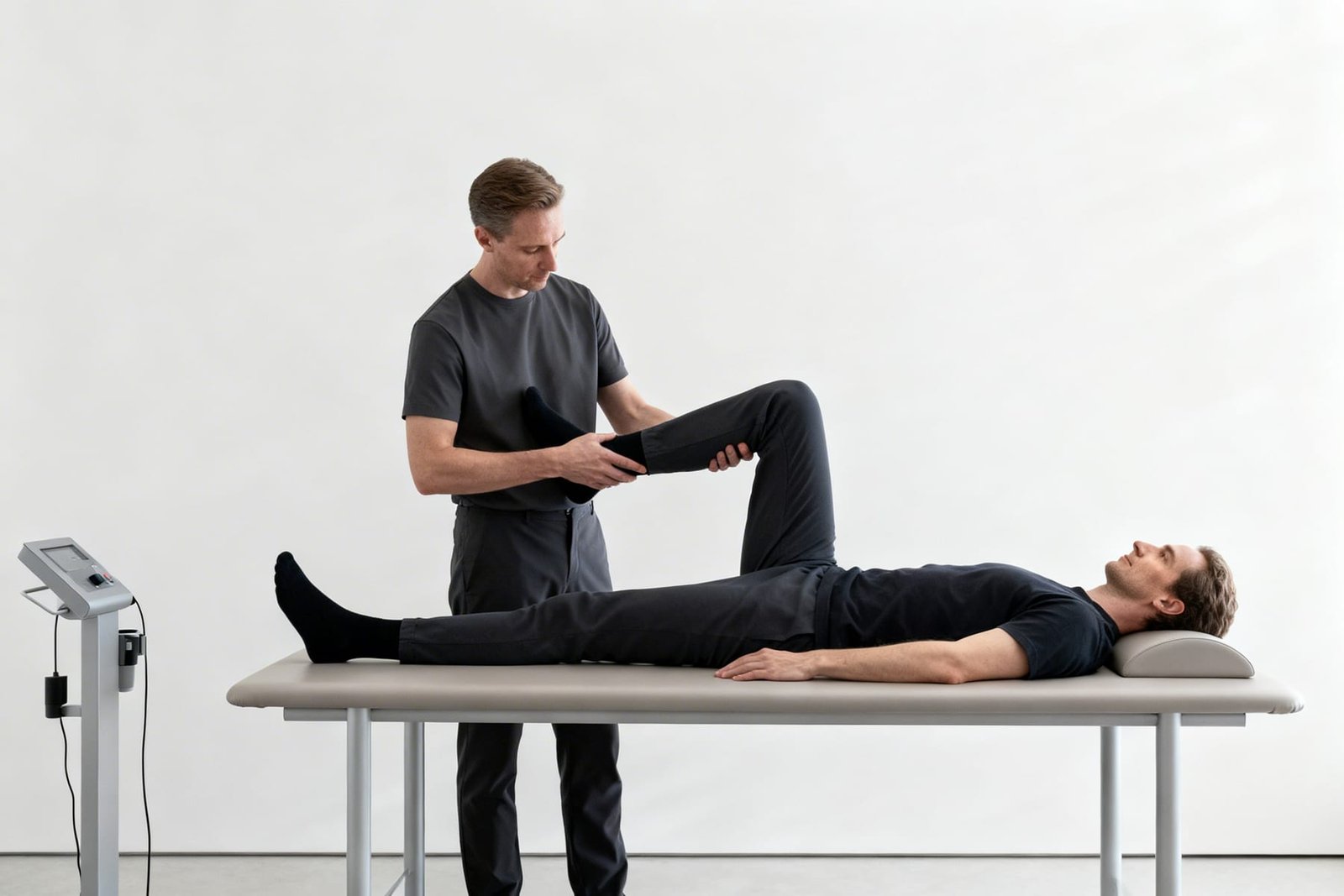
PNE can be accessed through books, clinician-led sessions, and online educational resources. The best results usually come when education is paired with active care and practical follow-through.
How to Access PNE
Step-by-Step IllustrationExplain Pain (Book)
David Butler & Lorimer Moseley
A foundational patient-facing resource that introduces modern pain science in accessible language.
Why Do I Hurt? (Book)
Adriaan Louw
A shorter, practical patient resource focused specifically on how understanding pain can support recovery.
Physical Therapist-Led Sessions
Licensed PT or pain specialist
Many physical therapists incorporate pain education into rehabilitation sessions, especially in chronic musculoskeletal pain.
Online PNE Courses & Videos
Various providers
Digital resources can be useful, especially when they come from recognized pain educators and are paired with active treatment rather than used as passive information alone.
Threat Reappraisal
Understanding that pain does not always mean damage can lower the perceived threat level of symptoms.
Reduced Fear
When pain feels less dangerous, patients are often more willing to move and re-engage with treatment.
Better Self-Efficacy
Patients often feel more capable and less helpless once they understand what pain is doing.
Support for Active Recovery
Education works best when it becomes the cognitive foundation for exercise, pacing, and rehabilitation.
Key Takeaways
Pain is a protective output of the nervous system, not a simple tissue-damage meter.
In chronic myofascial pain, the nervous system can become sensitized, so pain may become louder, more widespread, and more reactive over time.
Fear, stress, catastrophizing, and avoidance can all amplify pain.
Understanding pain can reduce threat and improve coping — that is one of the main reasons education matters clinically.
PNE is most useful when combined with active treatment rather than used alone.
The goal is not to convince patients the pain is “not real,” but to help them understand why real pain can persist without ongoing damage.
Neuroplasticity means the nervous system can change in both unhelpful and helpful directions.
Breaking the fear-avoidance cycle is often one of the biggest gains from pain education.
The bottom line: Pain Neuroscience Education helps patients reinterpret persistent pain in a more accurate and less threatening way. For myofascial pain, that often reduces fear, improves coping, and makes active rehabilitation more effective.