The McKenzie Method — MDT Fundamentals
McKenzie Method
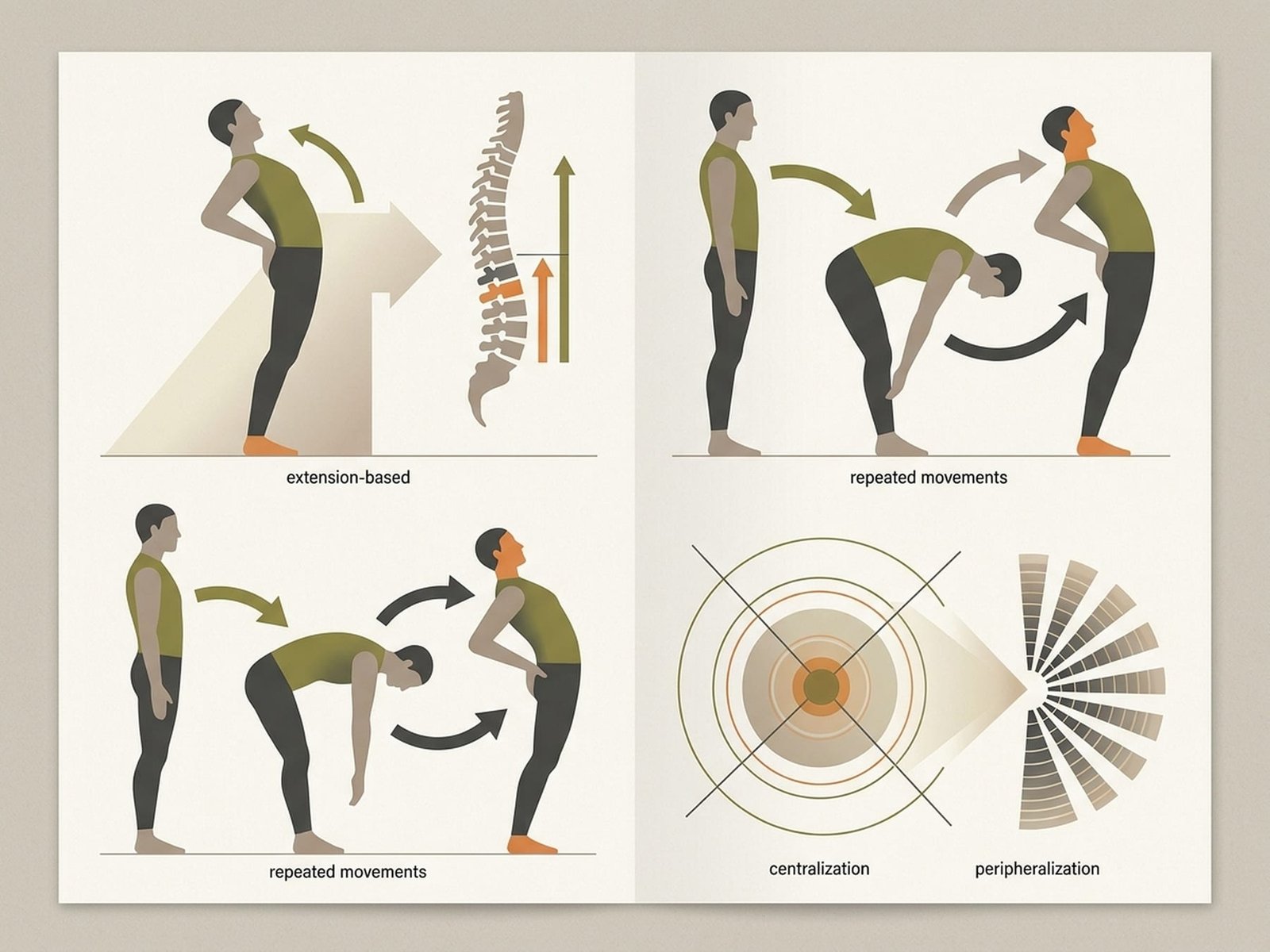
Directional Preference and Centralization Phenomenon OverviewThe McKenzie Method — Mechanical Diagnosis and Therapy (MDT) — is a structured system for assessing spinal pain through repeated movement and sustained loading. Its most important contribution is that the patient’s symptom response to movement helps guide treatment rather than exercise being prescribed generically.
MDT is especially useful because it gives clinicians a way to classify symptom behavior: which movements help, which worsen, and whether pain centralizes or peripheralizes. That movement response can be more clinically useful than imaging findings alone in many non-surgical spinal pain cases.
Its relevance to myofascial pain is practical: when spinal loading repeatedly irritates a patient’s symptoms, surrounding muscles may remain guarded and trigger points may recur even after good soft-tissue treatment. In those situations, addressing the spinal loading pattern may help make myofascial treatment more durable.
MDT is not the answer to every spinal pain problem. Some patients do not show a clear directional preference, some are too irritable for self-loading early on, and some presentations require in-person assessment because the symptom response is too complex or too neurological to manage casually.
Core MDT Concepts
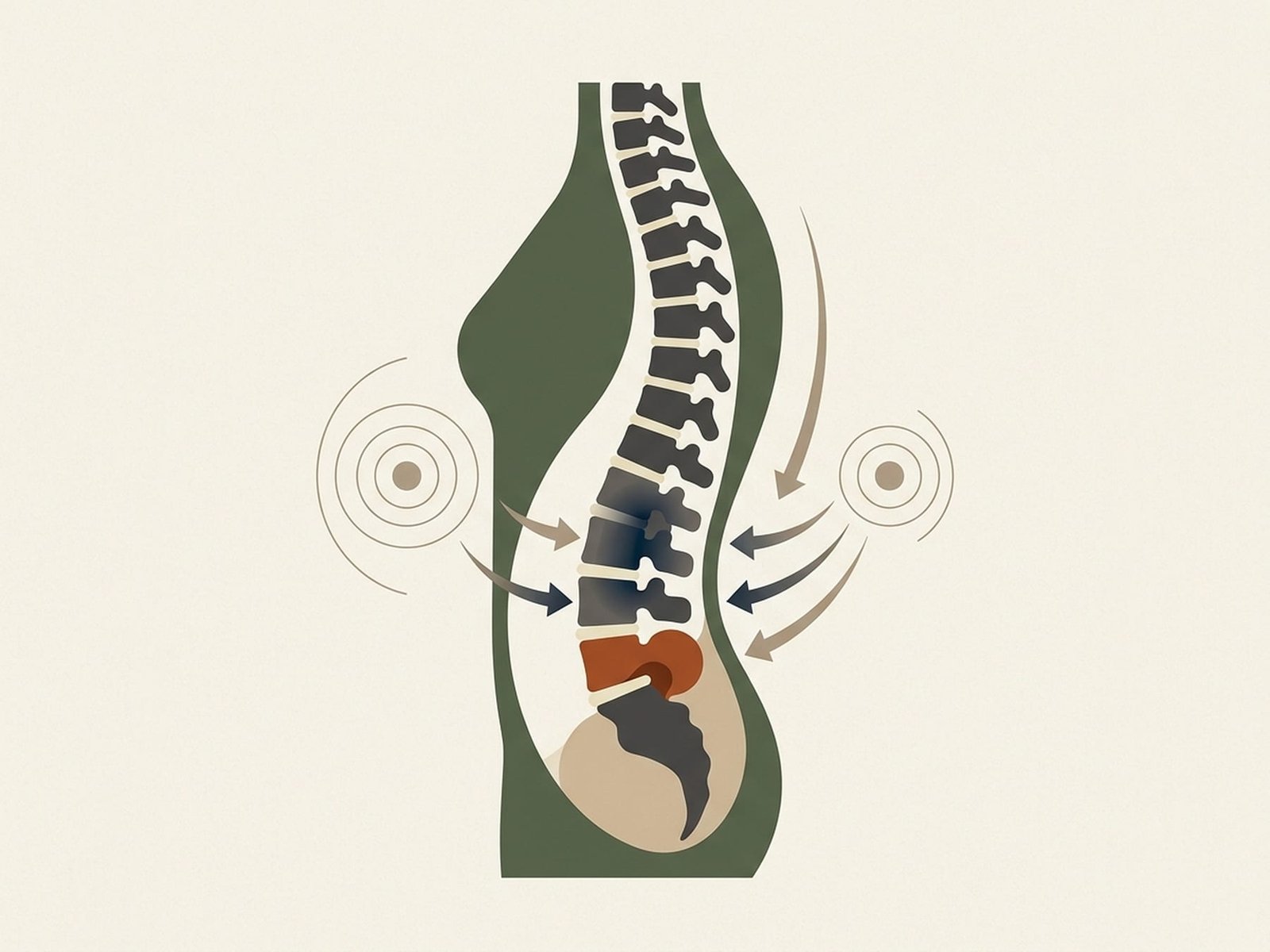
These concepts explain how MDT classifies pain behavior and why repeated movement testing can change the treatment plan in real time. The most important task is not memorizing terminology — it is learning how symptom behavior changes with movement.
MDT Core Concepts
Derangement, Dysfunction, and Postural Syndrome DiagramDirectional Preference
Centralization Phenomenon
Peripheralization
Postural Syndrome
Dysfunction Syndrome
Derangement Syndrome
- 01Phase 1: Assessment
Identify whether repeated movement reveals a clear helpful direction or a centralization pattern.
- 02Phase 2: Early Management
Use the most helpful loading direction conservatively and reassess symptom behavior often.
- 03Phase 3: Recovery
Progress movement range and force only if symptoms continue to behave favorably.
- 04Phase 4: Maintenance
Use the identified loading strategy and postural changes to reduce recurrence and support independence.
Evidence & Outcomes
MDT has a substantial research base in spinal pain rehabilitation. The evidence generally supports it as a useful option, particularly when compared with less specific passive care or unguided exercise. The strongest claims, however, should still be tempered by the fact that outcomes vary by subgroup, clinician skill, and how clearly a directional preference is present.
One of MDT’s practical advantages is self-management. When patients understand which movement tends to reduce or centralize symptoms, they often become less dependent on repeated passive treatment. This can be especially valuable in spinal pain that overlaps with recurring paraspinal or regional myofascial symptoms.
The strength of MDT is not that one exercise fixes everyone. It is that the patient’s movement response helps identify which direction is worth pursuing and which is not.
Movement Response
Guides the treatment direction
Centralization
Generally a favorable sign
Self-Management
A major practical advantage of MDT
MDT Self-Assessment
These examination components help identify whether a directional preference is present and whether self-loading appears safe and useful. They are better introduced after clinical guidance than used as an aggressive do-it-yourself sorting tool in severe pain.
Repeated Movement Testing
Postural Assessment
Movement Loss Assessment
Symptom Response Classification
Exercise Protocols
MDT exercises are prescribed based on how the patient actually responds during testing. Frequency, force, and progression should all be individualized rather than turned into one universal template.
MDT Exercise Protocols
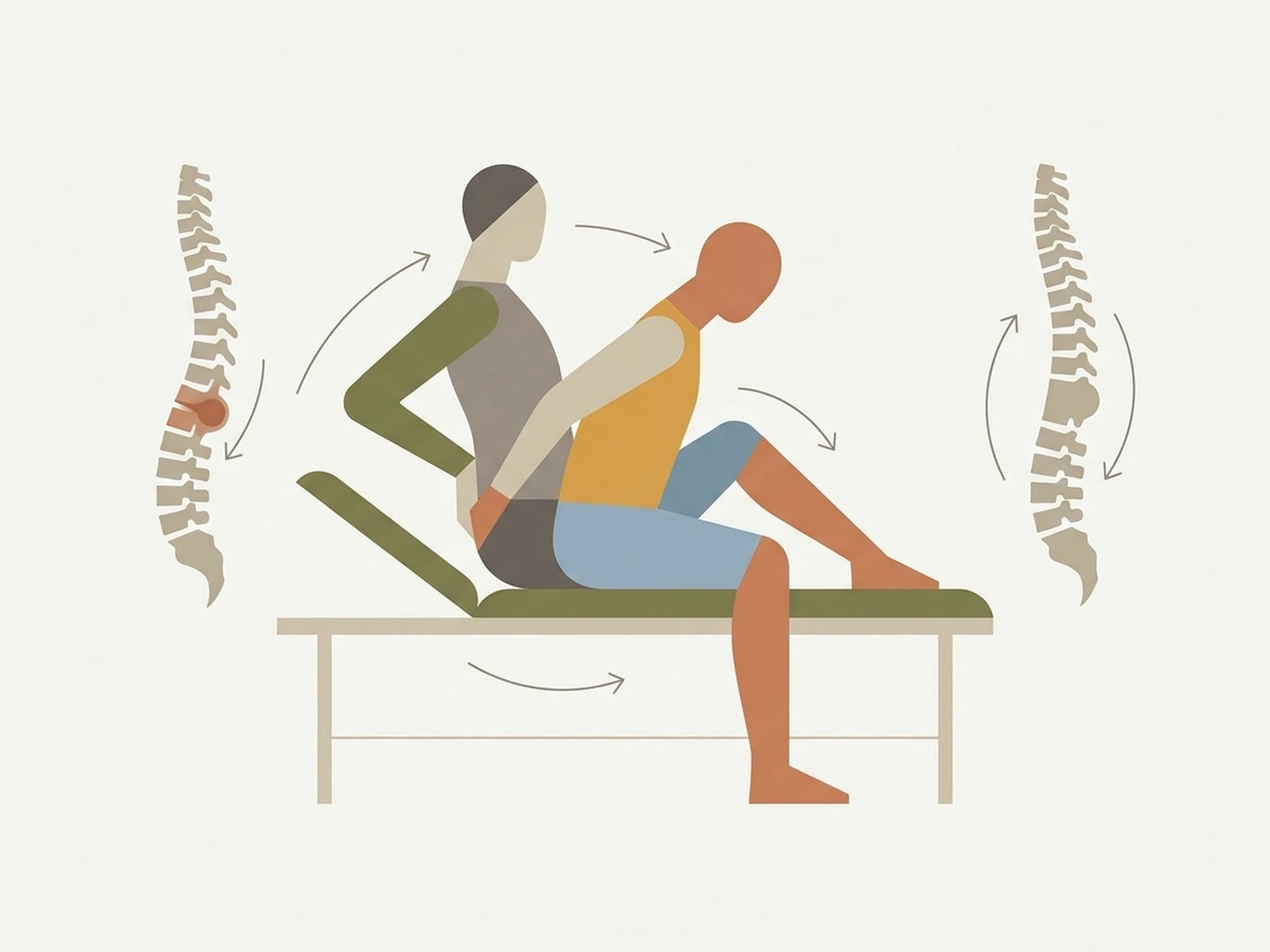
Press-up Progression and Lateral Correction SequenceExtension-Based Protocol
Extension-biased loading is one of the most commonly used MDT pathways, especially when symptoms improve or centralize with extension. It should be prescribed only when testing supports it, not simply because extension is common.
- Prone lying may be used as a very gentle starting position when extension is poorly tolerated
- Prone on elbows can be a progression if symptoms remain acceptable
- Press-ups are commonly used when repeated extension is clearly helpful
- Cervical retraction and extension are commonly used in neck presentations with a matching directional preference
- Exercise frequency and loading should be individualized based on symptom response and irritability
Flexion-Based Protocol
Flexion-biased loading is less common than extension but can be appropriate when testing clearly supports a flexion preference, such as some spinal stenosis or extension-intolerant presentations.
- Knee-to-chest or other lumbar flexion movements may be used when flexion clearly improves symptoms
- Seated flexion may be more practical for some patients than supine exercises
- Flexion should not be prescribed simply because a patient feels “tight” — it should match the symptom response pattern
- This pathway is especially relevant when extension clearly worsens symptoms and flexion clearly helps
- As with all MDT loading, reassessment matters more than rigid adherence to one exercise
Lateral Correction Protocol
Lateral correction is relevant when a visible or functional lateral shift appears to be part of the pain presentation. In some patients, addressing the lateral component first improves later response to sagittal-plane loading.
- Standing lateral self-correction or clinician-assisted correction may be used in selected cases
- Cervical side-gliding may be used when lateral cervical movement is the relevant aggravating or easing factor
- The goal is to reduce asymmetrical loading when that asymmetry appears clinically meaningful
- This is best progressed cautiously and reassessed often
- If symptoms worsen significantly or peripheralize, further self-loading should stop and specialist review is appropriate
Postural Re-education
Postural re-education is central to MDT because sustained loading habits often help maintain symptoms even after exercises reduce them. The practical aim is to reduce repeated end-range stress during daily life.
- Lumbar support, posture change, and sitting variation may be useful when sustained flexion is provocative
- Forward-head correction strategies may matter in selected cervical patients
- The goal is not rigid posture perfection but reducing the loading pattern that repeatedly provokes symptoms
- Alternating positions and regular movement breaks often matter more than holding one “ideal” posture all day
- Postural change is most successful when practiced consistently and linked to symptom understanding
Contraindications & Red Flags
MDT is generally safe when used appropriately, but some presentations require stopping self-loading and obtaining professional evaluation rather than pushing through symptoms.
MDT is one of the better-studied movement-based approaches for spinal pain, especially when a clear directional preference is present.
Its practical strength is that the movement response helps guide treatment rather than relying only on static diagnosis or imaging.
Centralization is an important favorable sign, but it should not be described as a guarantee of outcome.
For patients whose myofascial pain keeps recurring around a spinal problem, MDT may help address the movement or loading driver that keeps symptoms active.
MDT and myofascial treatment often work best as complementary approaches rather than as competing systems.
Repeated movement testing is powerful when done well, but patients with severe irritability, neurological change, or confusing symptom responses should be evaluated in person.