What Is Hypermobility?
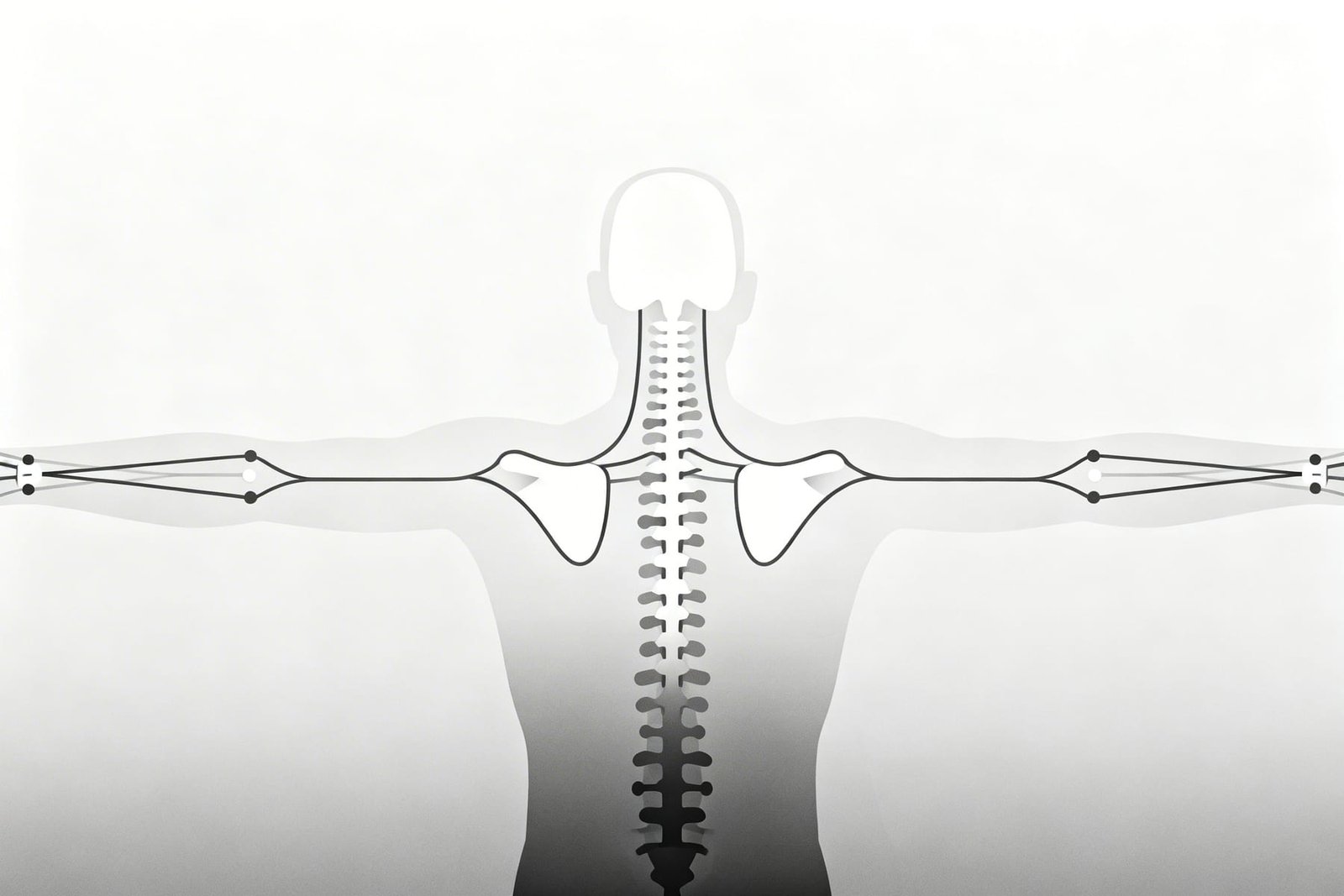
Joint Hypermobility Range of Motion
Joint hypermobility means your joints move beyond the normal range of motion. While often considered a party trick or a marker of flexibility, hypermobility is actually a spectrum of connective tissue variation that can have significant clinical consequences — especially for myofascial pain.
Hypermobile joints place extra demand on muscles for stability — when those muscles develop trigger points, a vicious cycle of pain and instability begins.
The hypermobility spectrum encompasses three main categories:
- Generalised Joint Hypermobility (GJH): Increased range of motion across multiple joints without significant symptoms. Present in 10–20% of the general population and often considered benign, though it can be a risk factor for developing pain later.
- Hypermobility Spectrum Disorder (HSD): Hypermobility with associated musculoskeletal symptoms (pain, instability, subluxations) that do not meet the criteria for hypermobile Ehlers-Danlos syndrome. This is the most common symptomatic presentation.
- Hypermobile Ehlers-Danlos Syndrome (hEDS): The most common form of EDS, characterised by generalised hypermobility plus systemic features of connective tissue fragility. Requires meeting specific diagnostic criteria (see Clinical Details below).
Key insight: Most hypermobile people do not know they are hypermobile. Because their range of motion has always been “normal” to them, they have no frame of reference. It is often only identified when a clinician specifically tests for it.
Beighton Score Self-Check
The Beighton score is a 9-point screening tool for generalised joint hypermobility. Check each manoeuvre you can perform.
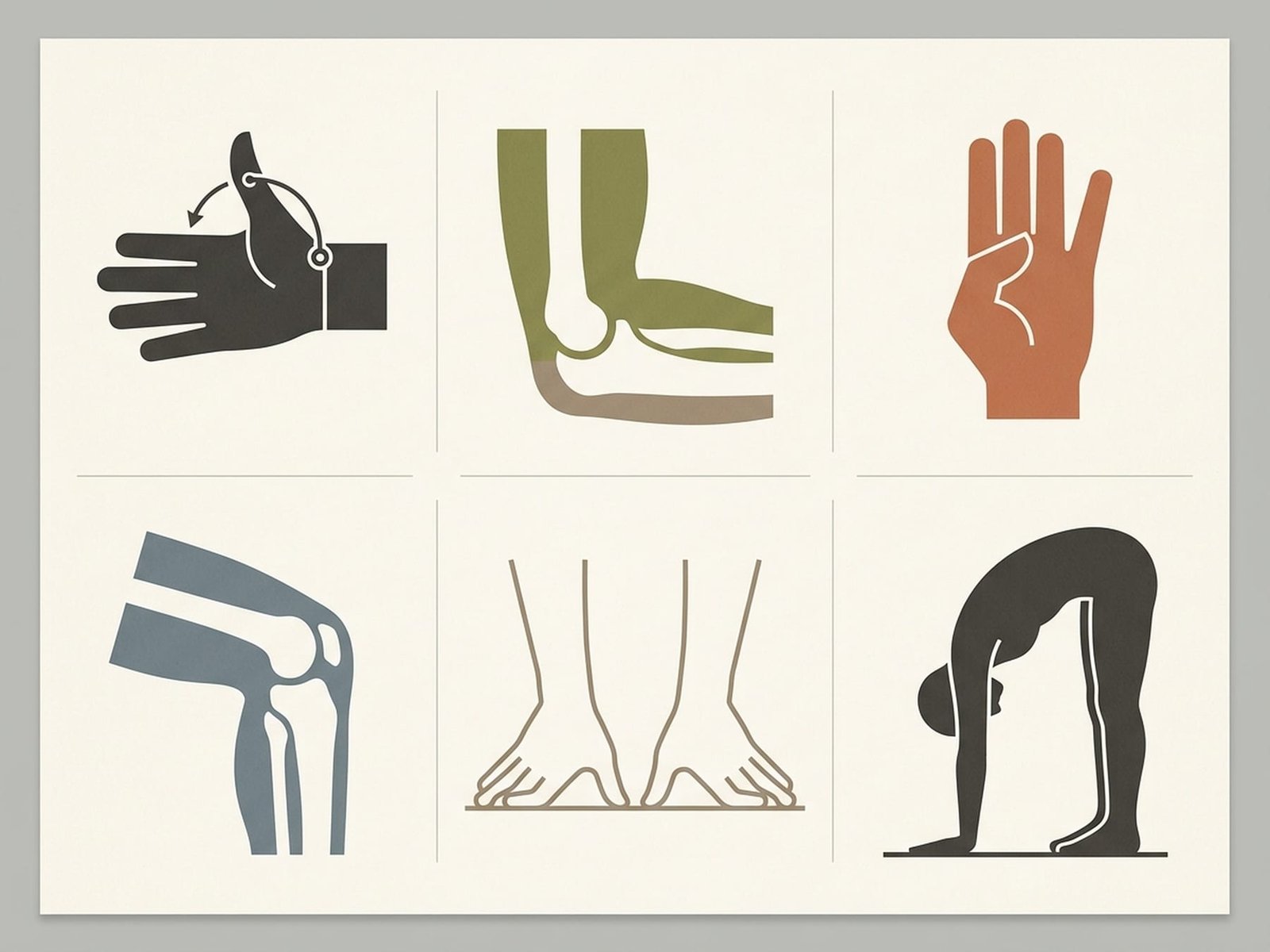
Beighton Score Assessment Maneuvers
0\u20133
Not hypermobile
4\u20136
Likely hypermobile
7\u20139
Highly hypermobile
This is a screening tool, not a diagnosis. A score ≥4 (or ≥5 in some criteria) suggests generalised hypermobility, but clinical assessment is needed for a formal diagnosis.
The Hypermobility–Trigger Point Connection

Hypermobility and Trigger Point Connection Diagram
The connection between hypermobility and trigger points is mechanical and predictable. When ligaments are too lax to provide adequate joint stabilisation, muscles must take over the stabilising role. This creates a chain reaction:
Ligament laxity → inadequate passive joint stabilisation
Muscle compensation → stabiliser muscles work overtime to protect the joint
Chronic overload → sustained contraction without adequate rest and recovery
Trigger point formation → localised energy crisis, taut bands, and referred pain
Pain and guarding → further muscle tension, more trigger points, and a self-perpetuating cycle
Stabiliser Muscles Most Affected
Rotator Cuff
Supraspinatus, infraspinatus, teres minor, subscapularis
Stabilise the glenohumeral joint during all shoulder movements. When ligaments are lax, these muscles work overtime to keep the humeral head centred in the glenoid.
Scapular Stabilisers
Serratus anterior, middle and lower trapezius, rhomboids
Control scapular position and movement. Hypermobile individuals often have scapular winging and dyskinesis due to chronic overload of these muscles.
Deep Cervical Flexors
Longus colli, longus capitis
Stabilise the cervical spine during head and neck movement. Weakness here is strongly associated with chronic neck pain and headaches in hypermobile patients.
Hip Stabilisers
Gluteus medius, deep hip rotators, iliopsoas
Control femoral head position in the acetabulum and stabilise the pelvis during gait. Lax hip ligaments force these muscles into chronic compensatory activation.
Why Standard Treatments May Not Work
Many patients with hypermobility-related myofascial pain have been through multiple rounds of treatment without lasting improvement. This is because standard protocols are often designed for patients with normal or restricted range of motion — not for those who are already too flexible.
Aggressive Stretching
The most common mistake. Stretching feels temporarily good because it provides sensory input to the nervous system, but it pushes already-lax joints further into instability. This worsens the underlying cause and creates more trigger points over time.
Standard Physical Therapy
Conventional rehabilitation programmes often include passive mobilisation, end-range stretching, and exercises that push joints into full extension. For hypermobile patients, this overstretches already lax joints and can make pain worse rather than better.
Dry Needling Without Modification
Dry needling can be effective for hypermobile patients, but it needs to be modified. Gentler technique, lighter stimulation, and shorter treatment sessions are important. The priority must remain addressing the underlying instability, not just the trigger points.
The fundamental principle: Treatment must address the underlying joint instability, not just the trigger points. Without improving stability, trigger points will return regardless of how effectively they are treated.
Treatment Considerations
What Works
Isometric Strengthening
Muscle contractions without joint movement. Builds strength and endurance in stabiliser muscles without stressing lax ligaments or moving through hypermobile ranges.
Proprioception Training
Balance boards, wobble cushions, single-leg stance, and eyes-closed exercises. Retrains the nervous system to detect and correct joint position, compensating for reduced ligament feedback.
Low-Load Motor Control Exercises
Gentle, precise movements that retrain deep stabiliser activation patterns. Focus on quality over quantity and correct muscle firing sequences rather than heavy loads.
Taping for Stability
Rigid or kinesiology taping provides external proprioceptive input and mild mechanical support. Particularly useful during exercise to prevent joints from moving into hypermobile ranges.
What to Avoid
Aggressive Stretching
Hypermobile joints are already too flexible. Stretching pushes them further into instability and worsens the compensation cycle that creates trigger points.
End-Range Passive Mobilisation
Passively forcing joints to their end range (common in manual therapy) is counterproductive in hypermobile patients. It increases laxity rather than reducing pain.
High-Rep Exercises to Fatigue
Exercising to muscle fatigue removes the stabiliser muscle protection, allowing joints to sublux or move into hypermobile ranges under load. Stop well before fatigue.
Modified Trigger Point Therapy
Gentler pressure: Use lighter compression and avoid deep sustained pressure. Hypermobile tissue is more reactive and can flare easily.
Shorter holds: Keep ischaemic compression holds to 20–30 seconds rather than the standard 60–90 seconds. Multiple shorter sessions are better tolerated.
Stability before mobility: Always pair trigger point treatment with stabilisation exercises. Releasing trigger points without improving stability will lead to rapid recurrence.
Self-Care for Hypermobile Patients
When to See a Specialist
While most hypermobile individuals can be managed effectively with modified exercise and lifestyle strategies, certain signs suggest an underlying connective tissue disorder that requires specialist evaluation.
Red Flags for Connective Tissue Disorders
Skin that is unusually stretchy, fragile, bruises very easily, or heals with wide papyraceous scars
Unexplained vascular events (spontaneous arterial dissection, aneurysm, or rupture)
Organ prolapse (uterine, bladder, or rectal)
Family history of sudden death, aortic root dilation, or connective tissue disorder
Chronic joint dislocations or subluxations (not just hypermobility)
Dental crowding, high palate, or translucent skin
Severe fatigue, dysautonomia (POTS), or mast cell activation syndrome
Who to See
Rheumatologist
For joint hypermobility evaluation, connective tissue disorder screening, and ongoing management.
Geneticist
For suspected hereditary connective tissue disorders, EDS subtype confirmation, and genetic counselling.
Specialised Physiotherapist
For hypermobility-specific rehabilitation, stabilisation programmes, and modified exercise prescription.
Important: A proper diagnosis should be established before beginning any treatment programme. Different types of connective tissue disorders have different management considerations, and some require precautions that go beyond standard hypermobility care.
Clinical Details
Expandable clinical reference sections for healthcare professionals and informed patients
Key Takeaways
Hypermobility Is Common
A notable share of the population has some degree of joint hypermobility. Most people are unaware they are hypermobile, and it is frequently missed in clinical assessments.
Muscles Compensate for Lax Ligaments
When ligaments are too loose to stabilise joints, muscles must work overtime. This chronic overload creates the trigger points that cause myofascial pain.
Standard Treatments May Backfire
Stretching, aggressive manual therapy, and end-range mobilisation can worsen hypermobility. Treatment must prioritise stability before flexibility.
Stability First, Then Strength
The treatment priority is isometric strengthening, proprioceptive retraining, and motor control. Build a stable foundation before adding load or complexity.
Modified Trigger Point Therapy
Dry needling and manual therapy must be gentler, with shorter holds and reduced pressure. The underlying instability must be addressed alongside trigger point treatment.
Know When to Seek Specialist Care
Skin fragility, vascular events, organ prolapse, or family history of connective tissue disorders warrant referral to a rheumatologist or geneticist for proper evaluation.
Continue Learning
Prolotherapy
Regenerative injection therapy that strengthens lax ligaments — particularly relevant for hypermobile patients.
Read moreStrategic Clinical Insights
Advanced clinical reasoning for complex myofascial cases, including hypermobility considerations.
Read moreSelf-Assessment
Guided self-assessment tools to help identify your trigger points and contributing factors.
Read moreConnected Conditions
How Myofascial Pain Syndrome connects with fibromyalgia, migraine, TMJ, and other conditions that overlap with hypermobility.
Read more