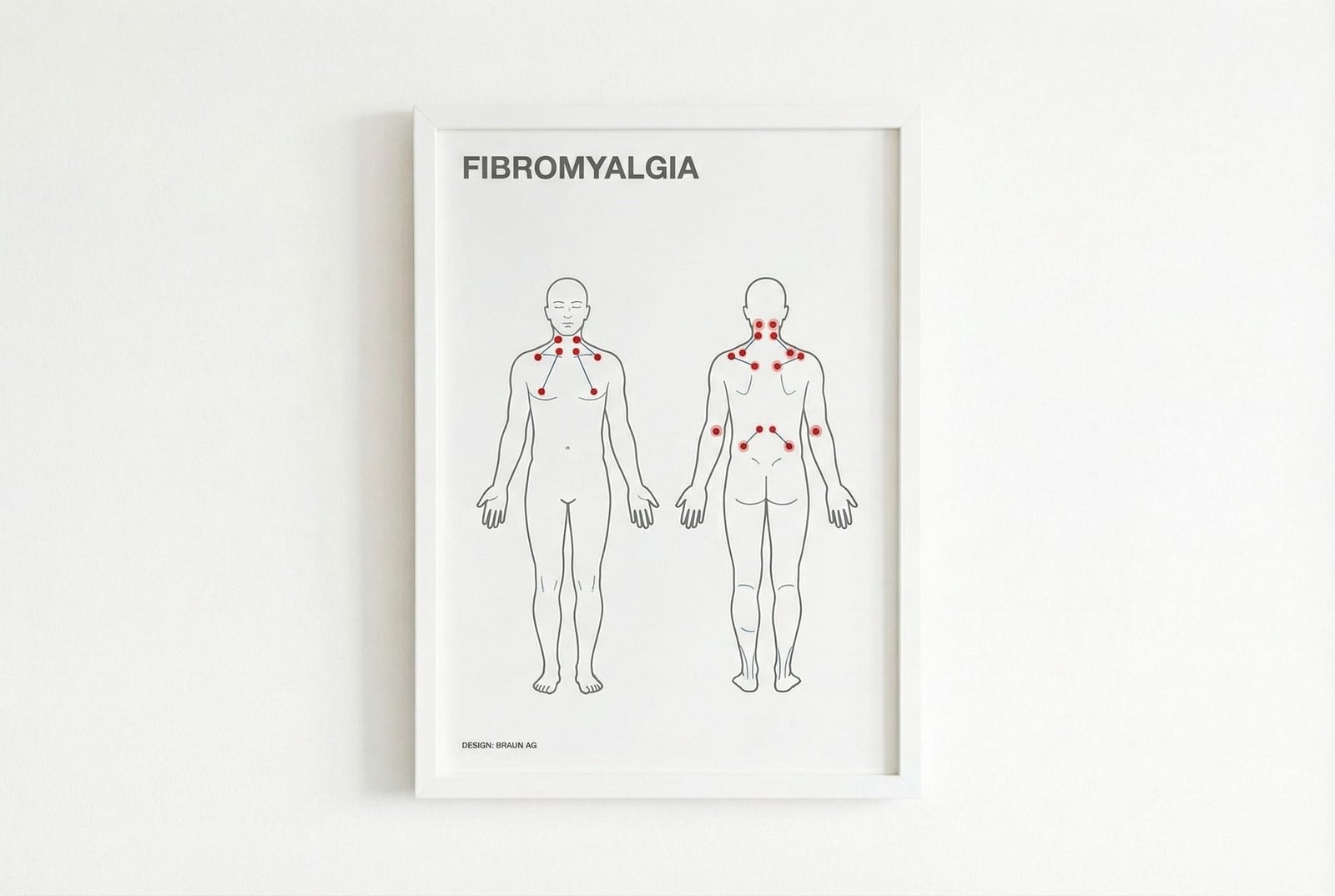
About Fibromyalgia

Fibromyalgia vs. MPS

Fibromyalgia vs. MPS

Overview of Key Differences

Fibromyalgia is a chronic pain condition characterized by widespread pain, fatigue, non-restorative sleep, and cognitive difficulties. It is diagnosed clinically using standardized criteria that assess pain distribution and symptom severity. It is relatively common, with estimates suggesting it affects a few percent of the population and is diagnosed more often in women.

Current understanding focuses on altered central pain processing — the way the nervous system handles pain signals appears to be amplified. Research using functional neuroimaging has identified differences in how the brain processes sensory input in affected individuals. Reduced descending pain inhibition and altered neurotransmitter signaling are among the mechanisms discussed in the literature.

Beyond pain, fibromyalgia is associated with a broader cluster of symptoms including fatigue, cognitive difficulties, irritable bowel symptoms, and mood disturbance. This wider symptom profile helps distinguish it from conditions that are primarily regional and musculoskeletal.

About Myofascial Pain Syndrome

Myofascial pain syndrome is a regional pain condition associated with trigger points — tender areas within taut bands of skeletal muscle that may produce local and referred pain. It is commonly identified in musculoskeletal pain evaluations, though prevalence estimates vary depending on the clinical setting and assessment methods used.

The trigger point is the central clinical finding associated with MPS. It typically presents as a palpable area within a taut band of muscle that is tender to pressure and may reproduce a recognizable pain pattern. The underlying mechanisms are discussed in the literature but not fully established — proposed models involve sustained muscle contraction, local metabolic changes, and sensitization of nearby nerve endings.

Contributing factors — including sustained postures, repetitive strain, sleep quality, stress, and nutritional status — are commonly discussed as influences on trigger point persistence. When these factors are not addressed, trigger points may recur after treatment. The relative importance of individual contributing factors varies between patients.

How They Compare
Side-by-Side: How the Two Conditions Compare

Side-by-Side: How the Two Conditions Compare

Feature
FibromyalgiaMyofascial Pain Syndrome

Pain Type

Widespread, diffuse pain — often described as deep aching, burning, or generalized soreness. Pain is not confined to any single muscle or region and often fluctuates over time.
More regional, often localized to specific muscles or muscle groups. Pain is commonly described as a deep, steady ache associated with tender muscular areas, though the pattern can broaden in more complex cases.

Pain Location

Typically bilateral, above and below the waist, with axial involvement. The 2016 revised criteria use a Widespread Pain Index capturing pain across multiple body regions.
Usually confined to one or several muscle groups and may be asymmetric. Pain distribution often resembles recognized muscular referral patterns, though not every patient follows textbook maps exactly.

Tender Points vs. Trigger Points

Tender points are areas of generalized tenderness without palpable nodules or taut bands. The original 1990 criteria used a tender point count; the 2010/2016 criteria replaced this with the Widespread Pain Index and Symptom Severity Scale.
Trigger points are hyperirritable spots within a taut band of skeletal muscle that may produce referred pain and sometimes local twitch responses when compressed or needled. Their clinical significance and reliability as diagnostic markers remain debated.

Taut Bands

Typically not a defining finding. Muscles may feel generally tender or stiff, but palpation does not usually reveal clear discrete taut bands in the classic trigger-point sense.
May be present. Taut bands are palpable, rope-like areas within the muscle associated with trigger points. Their detection depends on examiner skill and remains subject to inter-rater variability.

Referred Pain

Not a primary defining feature. Pain tends to be more diffuse and widespread than regionally referred from one specific muscle.
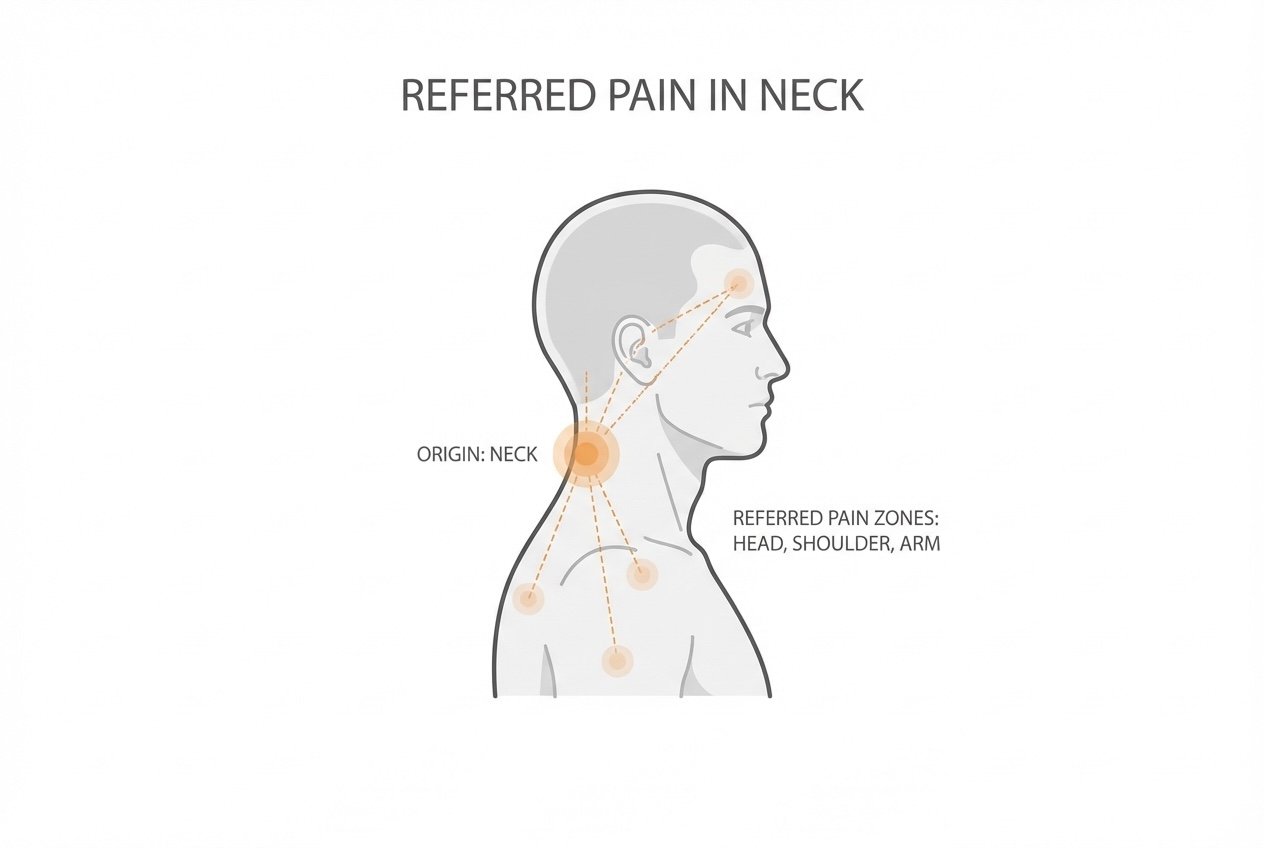
A commonly described feature. Trigger points are associated with referral patterns documented in clinical literature. Reproducing a patient’s familiar pain by pressing on a trigger point may support the assessment, but is not fully definitive on its own.

Central Sensitization

Widely considered a major part of the condition. Research suggests augmented central pain processing with reduced descending inhibition and broader sensory amplification.
Can be present, especially in chronic or widespread cases. MPS is often conceptualized as more regionally or peripherally dominant, but central sensitization may also contribute in some patients.

Fatigue & Sleep

Prominent features. Non-restorative sleep, fatigue, and disrupted sleep are core parts of the clinical picture.
Not usually the primary defining features, though pain commonly disrupts sleep and can secondarily contribute to fatigue, especially in persistent or multi-region cases.

Cognitive Symptoms

Cognitive difficulties (often called "fibro fog") — including problems with concentration and word retrieval — are commonly reported and included in diagnostic criteria.
Cognitive symptoms are not usually considered a primary feature, though poor sleep, chronic pain burden, and comorbid conditions can still affect concentration.

Response to Local Treatment

Local treatments (injection, needling, manual work) may provide limited, partial, or variable relief. Because the pain-processing burden is broader, peripheral-targeted treatments may not address the full picture.
Local treatment (manual therapy, needling, injection) often produces meaningful improvement, though responses vary between individuals and lasting benefit usually depends on addressing contributing factors as well.

Primary Treatment Approaches

Typically multimodal: medications that modulate pain processing, graduated exercise, psychological approaches, sleep management, and patient education.
Typically involves direct treatment of painful muscular areas (manual therapy, needling, injection) combined with attention to contributing factors (posture, movement, sleep, stress) and progressive rehabilitation.

Course

Tends to be a chronic condition requiring ongoing management. Symptom reduction is achievable for many patients, though the course is variable and fluctuating.
Variable. Individual trigger points may settle with treatment, but recurrence is common when contributing factors remain active. Chronic cases may require sustained management.

Coexistence

The two conditions can coexist. Fibromyalgia patients may also develop trigger points related to deconditioning, postural guarding, or regional overload. When present, addressing the muscular component may help some patients.
The two conditions can coexist. In some patients with longstanding myofascial pain, broader sensitization features may emerge over time, though this is not inevitable and should not be assumed automatically.

Assessment Considerations

FibromyalgiaMyofascial Pain Syndrome

Pain Distribution

One of the more helpful initial observations.

Widespread: bilateral, above and below waist, involving multiple regions.
More regional: confined to one or several muscle groups, often with identifiable tender muscular areas.

Palpation Findings

What the clinician finds on hands-on examination — though examiner reliability varies.

Generalized tenderness without clear discrete taut bands or nodules. Allodynia or diffuse pressure sensitivity may be present.
Discrete taut bands may be found, with tender areas that may reproduce a familiar pain pattern when pressed.

Systemic Symptoms

Whether symptoms extend beyond the musculoskeletal system.

Fatigue, cognitive difficulties, non-restorative sleep, and other systemic symptoms are typical.
Symptoms are more often regionally musculoskeletal, unless comorbid conditions are present.

Response to Local Treatment

How symptoms respond to treatment directed at specific muscles — though responses vary.

Often variable, partial, or limited response to treatments targeting specific muscles alone.
Often meaningful improvement with treatments targeting identified trigger points or muscular dysfunction, though not universally.

Onset Pattern

How the condition developed.

Often gradual onset without a single clear inciting event. Flares may be triggered by stress, weather, poor sleep, or exertion.
May sometimes be traceable to an inciting event (injury, overuse, postural strain), though not in every case.

Overlap and Coexistence

Fibromyalgia and myofascial pain syndrome involve different clinical patterns, but they can coexist and interact. Careful assessment helps determine a more appropriate approach for each individual.

Fibromyalgia and MPS can coexist. Some patients with fibromyalgia also have identifiable trigger points that may be contributing to their overall pain burden. Conversely, some patients with longstanding myofascial pain may develop broader sensitization features over time. The two conditions are not mutually exclusive.

When both conditions appear to be present, treatment may need to address both the broader pain-processing burden and the regional muscular component. The optimal approach depends on the individual clinical picture and is best determined through careful assessment.

Treatment Approaches

Treatment Approaches

Treatment Approaches

Fibromyalgia and MPS
Typically multimodal

Fibromyalgia Management

Medications

  • Medications that modulate pain processing (e.g., duloxetine, pregabalin, amitriptyline) are commonly used
  • Medication choices are individualized based on symptom profile and tolerability
  • No single medication is sufficient on its own for most patients

Exercise & Physical Activity

  • Graduated aerobic exercise is among the more strongly supported interventions
  • Starting gently and increasing gradually is usually recommended, as some patients experience symptom worsening with too-rapid escalation
  • Aquatic exercise, tai chi, and yoga have shown benefit in some studies

Psychological & Behavioral Approaches

  • Cognitive behavioral therapy and related approaches have evidence for fibromyalgia
  • Sleep quality is an important treatment target
  • Stress management and pacing strategies are commonly recommended
Typically involves local treatment plus contributing factor management

MPS Management

Direct Treatment

  • Manual therapy, dry needling, and trigger point injection are commonly used approaches
  • The choice depends on availability, clinician training, and patient preference
  • Responses vary — some patients improve quickly, others require more sustained treatment

Contributing Factors

  • Posture, ergonomics, movement habits, sleep position, and stress are commonly discussed as contributing factors
  • Nutritional factors (iron, vitamin D, B12) may be worth screening for when clinically relevant
  • Addressing these factors may help reduce recurrence, though the evidence for each individual factor varies

Exercise & Rehabilitation

  • Stretching and progressive strengthening of affected muscles are commonly recommended
  • Motor control and movement quality work may help in some cases
  • Self-care techniques (foam rolling, heat, self-massage) are widely used for ongoing management

Common Questions

Can I have both fibromyalgia and myofascial pain syndrome?

Yes, the two conditions can coexist. Some patients with fibromyalgia also have identifiable trigger points that may be contributing to their pain. When both are present, addressing the myofascial component may help some patients — though the degree of benefit varies. Treatment in these cases typically needs to address both the broader pain-processing burden and the regional muscular component.

How is fibromyalgia diagnosed?

Fibromyalgia is diagnosed clinically using the 2016 revised ACR criteria, which assess the distribution of pain across body regions (Widespread Pain Index) and the severity of associated symptoms like fatigue, non-restorative sleep, and cognitive difficulties (Symptom Severity Scale). There is no blood test or imaging study that identifies fibromyalgia. Other conditions that can produce similar symptoms should be considered and excluded as appropriate.

Can myofascial pain evolve into fibromyalgia?

Some researchers have proposed that chronic peripheral pain input, including from trigger points, may contribute to the development of broader sensitization in predisposed individuals. This is a plausible hypothesis, but it is not established as a predictable progression. Many people with chronic myofascial pain do not develop fibromyalgia. The relationship between the two conditions is complex and not fully understood.

What kind of clinician should I see?

This depends on your specific symptoms and what has been evaluated so far. Physiatrists (physical medicine and rehabilitation specialists) are trained in both central and peripheral pain mechanisms. Rheumatologists often have expertise in fibromyalgia. Physiotherapists with musculoskeletal training can assess for trigger points. When both conditions are suspected, a clinician comfortable with both diagnoses is helpful.

Why might local treatment help for MPS but not fibromyalgia?

The common explanation is that in MPS, the trigger point or regional muscular dysfunction is an important contributor to pain, so treating it directly may reduce symptoms. In fibromyalgia, the pain-processing burden is broader, so peripheral treatments may have less complete impact. However, this distinction is not absolute — some fibromyalgia patients do benefit from local treatment, and some MPS patients have less clear-cut responses than expected.

Is fibromyalgia a real condition?

Yes. Fibromyalgia is a recognized condition with evidence of altered pain processing in the central nervous system. Research has identified measurable differences in how the brain processes pain signals in affected individuals. While psychological factors can influence symptom severity, fibromyalgia is not considered a purely psychological condition. Dismissing it as such is not supported by current evidence.
Key Takeaways
  1. Fibromyalgia and myofascial pain syndrome are distinct conditions that can overlap. Fibromyalgia is associated with widespread pain and broader pain-processing changes; MPS is associated with more regional pain and trigger-point-related muscular findings.

  2. The distinction between them is clinically useful but not as clean as a table suggests. In practice, many patients present with features of both.

  3. Assessment involves careful clinical evaluation. No single finding — taut bands, pain reproduction, treatment response, or symptom distribution — is individually decisive in every case.

  4. Treatment approaches differ: fibromyalgia typically requires multimodal broader management; MPS typically involves local treatment plus attention to contributing factors. When both are present, both aspects may need attention.

  5. The relationship between the two conditions is an area of ongoing clinical discussion. Some clinicians view them as more distinct, while others emphasize overlap. The evidence does not fully resolve this question.

  6. Neither condition has a definitive diagnostic blood test or routine imaging study. Both remain clinical diagnoses that depend on careful history-taking and examination.