§ 01

What Is Electroacupuncture?
Electroacupuncture Treatment

Electroacupuncture Treatment

Overview Diagram

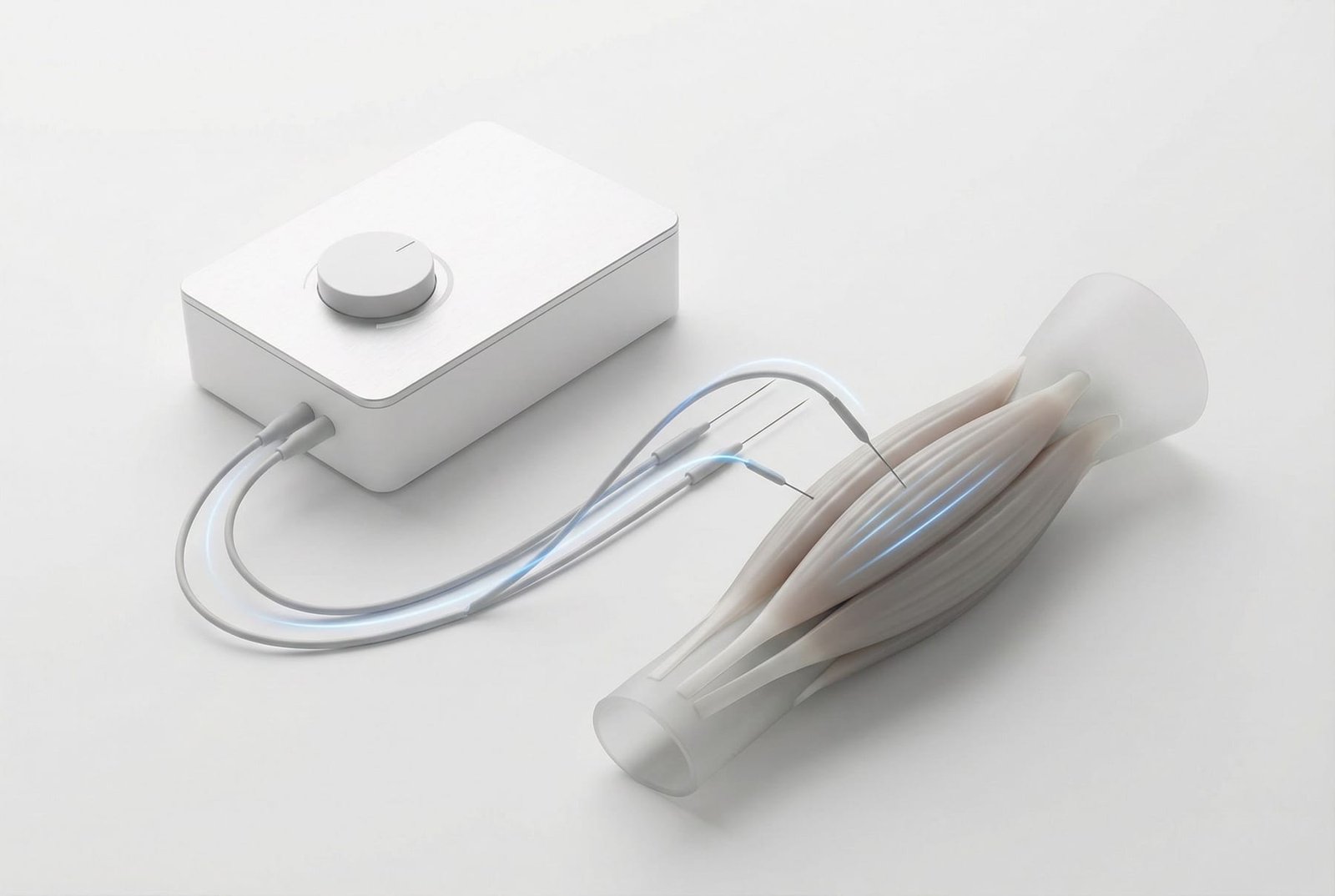
Electroacupuncture (EA) combines acupuncture needle insertion with pulsed electrical current delivered between pairs of needles. After filiform needles are inserted into target points — whether myofascial trigger points, motor points, or traditional acupuncture points — an EA stimulator is connected to the needle handles via clips. The device then delivers controlled electrical pulses at selected frequencies and intensities through the underlying tissue.

The technique developed as a way to make acupuncture stimulation more reproducible. Manual needle techniques such as twirling, lifting, and thrusting vary more by practitioner style and fatigue. EA allows more precise control over frequency, pulse pattern, and intensity, which is one reason it became important in both research and clinical practice.

EA is used for myofascial pain syndrome, chronic musculoskeletal pain, postoperative pain, nausea-related indications, and a range of other conditions depending on the clinician’s training model. In trigger point practice, its main appeal is that it combines deep tissue access with a controllable stimulation dose.

§ 02

Mechanism of Action

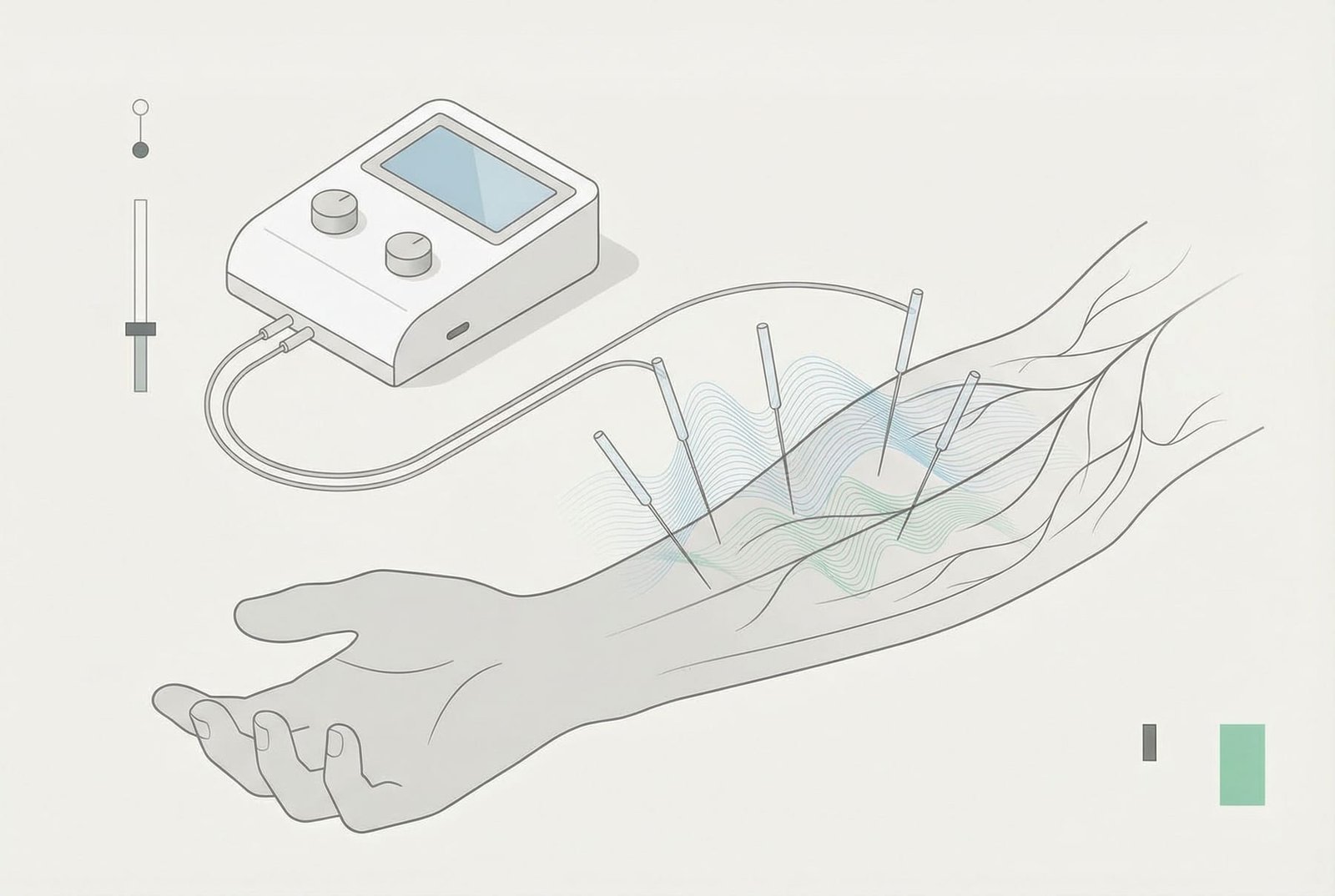
Electroacupuncture likely works through several overlapping neurophysiological mechanisms rather than through a single pathway. Frequency-dependent opioid engagement is one important model, but spinal gating, descending inhibition, local tissue effects, and broader pain-modulation pathways probably all contribute.

Electroacupuncture combines the precision of needle placement with the reproducibility of device-controlled stimulation.
Mechanism of Action

Mechanism of Action

Mechanism Diagram

Frequency-Dependent Opioid Release

A substantial body of experimental work suggests that stimulation frequency influences which endogenous opioid systems are engaged most strongly. Low frequency stimulation has been associated more with beta-endorphin and enkephalin pathways, while higher frequency stimulation has been associated more with dynorphin-related pathways. Alternating frequencies such as 2/100 Hz are commonly used because they may broaden the analgesic response and may reduce adaptation to a single stimulation pattern.

Segmental Spinal Inhibition

EA likely contributes to segmental analgesia through activation of afferent fibers that influence dorsal horn processing. In practical terms, this fits with gate-control style models in which non-nociceptive and mixed afferent input can reduce the transmission of pain signals at the spinal level.

Descending Inhibitory Pathways

EA is also thought to engage supraspinal pain-modulating networks, including brainstem pathways involved in descending inhibition. This helps explain why clinical benefit may extend beyond the exact local needle site and why some patients report broader analgesic effects after treatment.

Anti-Inflammatory Effects

Preclinical and some clinical research suggests EA may influence inflammatory signaling, including mediators such as COX-2, PGE2, and pro-inflammatory cytokines. These effects should be described cautiously in patient education, but they provide a plausible mechanism for reduced peripheral sensitization around painful tissues.

Local Blood Flow Restoration

EA may improve local circulation and autonomic regulation in the treated region. In trigger point practice, this is often cited as one reason tissue sensitivity, stiffness, or aching may improve after treatment, especially in areas that feel chronically tight or underperfused.

Motor Point Muscle Relaxation

When stimulation is delivered through needles placed near motor points or within a taut band, visible rhythmic contraction may occur. These repeated contraction-relaxation cycles may help alter local muscle tone, reduce guarding, and improve tolerance to movement in selected patients.

Neuroplastic Adaptations

Repeated EA sessions may produce longer-term changes in pain modulation and symptom sensitivity. It is more accurate to describe this as possible cumulative neuroplastic adaptation rather than as a guaranteed progressive effect in every patient.

Standardized vs. Manual Stimulation

A major practical advantage of EA is that frequency, pulse pattern, and intensity can be delivered in a more standardized way than manual needle manipulation alone. This does not automatically make EA superior in every case, but it does make the dose more reproducible and easier to study.
§ 03

Frequency Selection — A Key Variable

Frequency is one of the most important EA parameters because it influences the type of stimulation delivered and the dominant analgesic profile clinicians are trying to achieve. Han Ji-Sheng’s work remains a major reference point for this model, even though real-world physiology is more complex than a simple one-frequency-one-opioid rule.

2 Hz — Low Frequency

Commonly Associated PathwaysCommonly associated with beta-endorphin + enkephalin pathways
Receptor TargetsMu (μ) and Delta (δ) opioid receptor systems are often emphasized
Analgesia ProfileOften described as deeper, slower-onset analgesia
Onset / DurationUsually slower onset — May persist longer in some patients
Best ForChronic pain presentations and more persistent myofascial patterns

15 Hz — Medium Frequency

Commonly Associated PathwaysMixed opioid and non-opioid effects are often proposed
Receptor TargetsBroader but less specifically characterized profile
Analgesia ProfileBalanced stimulation profile
Onset / DurationModerate onset — Moderate duration
Best ForGeneral musculoskeletal pain when a middle-range setting is preferred

100 Hz — High Frequency

Commonly Associated PathwaysOften associated more with dynorphin-related pathways
Receptor TargetsKappa (κ) opioid receptor systems are often emphasized
Analgesia ProfileOften described as faster-onset, more segmental analgesia
Onset / DurationUsually faster onset — May fade sooner than low-frequency effects
Best ForAcute flares, sharper localized pain, or shorter-term symptom control

2/100 Hz — Dense-Disperse (Alternating)

Commonly Associated PathwaysBroader endogenous opioid engagement is commonly proposed
Receptor TargetsMay recruit multiple opioid receptor systems across the session
Analgesia ProfileMixed widespread and localized analgesic profile
Onset / DurationCombined onset profile — Often chosen when a broader and more durable response is desired
Best ForMyofascial pain syndrome and mixed chronic-plus-flare presentations
§ 04

Treatment Protocol for Myofascial Pain Syndrome
Treatment Protocol for Myofascial Pain Syndrome

Treatment Protocol for Myofascial Pain Syndrome

Step-by-Step Illustration

Point Selection

Identify active myofascial trigger points through palpation of taut bands, tenderness, local irritability, and referred pain patterns when present. Local trigger points may be paired with nearby local or segmentally related points, depending on the treatment model being used. Because EA requires a circuit between needles, point selection should account for the likely current path through the target tissue.

Needle Insertion

Insert sterile, single-use filiform needles into the selected points. In trigger point practice, the clinician may seek a taut band response or local twitch when appropriate, but an obvious twitch is not mandatory for treatment to be useful. Needle depth should match the anatomy and the target tissue.

Electrode Connection

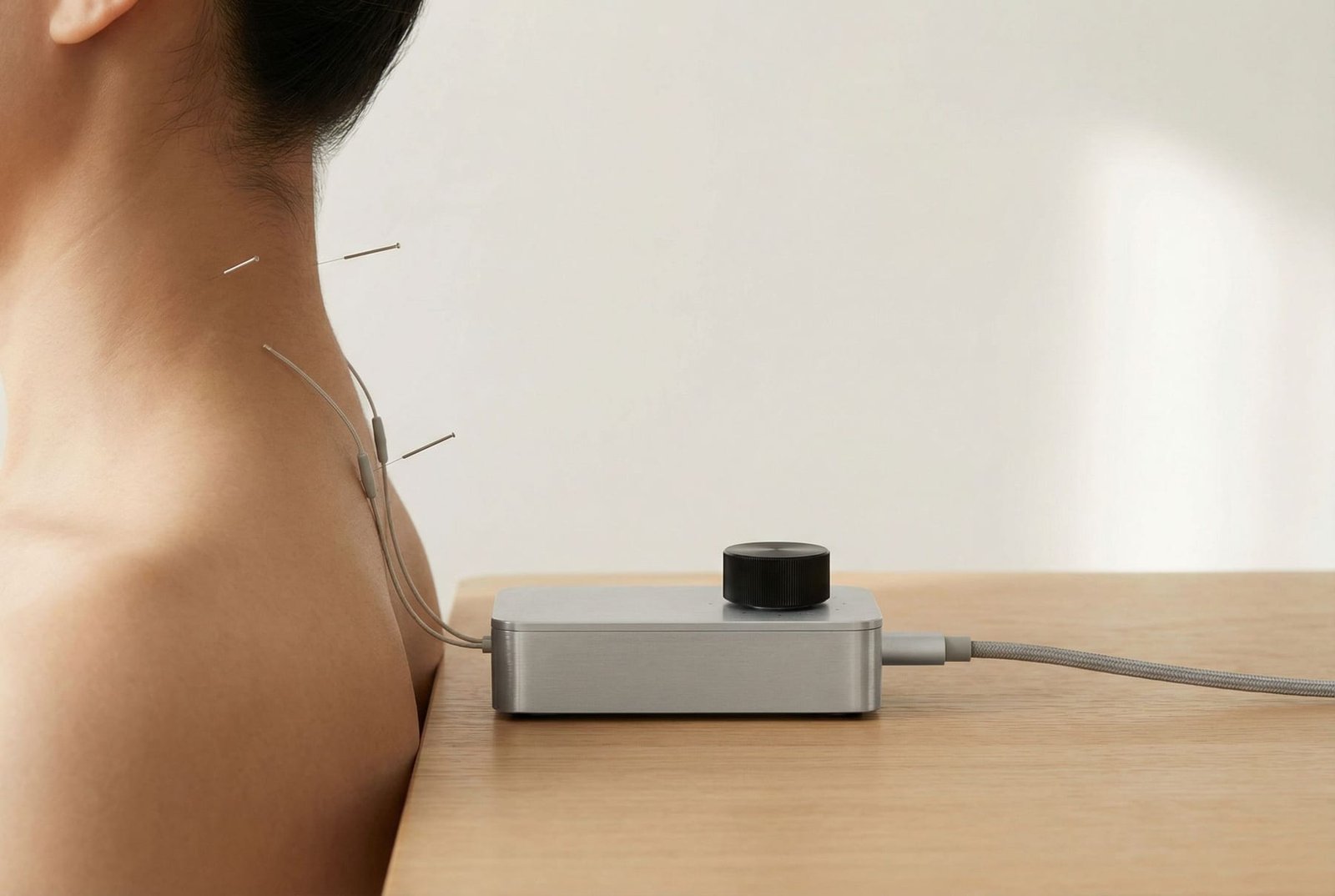
Attach EA device leads to 2–4 needle pairs per session depending on the region and treatment plan. Each pair forms an electrical circuit. In myofascial treatment, clinicians often pair needles within the same muscle, across a taut band, or within the same symptomatic region rather than using a purely formulaic setup.

Parameter Setting

Select frequency, waveform, and intensity based on the clinical goal. For myofascial pain syndrome, dense-disperse settings such as 2/100 Hz are commonly used, though they are not the only acceptable approach. Increase intensity gradually until the patient feels a strong but tolerable sensation, often with visible rhythmic muscle twitching in some regions.

Treatment Duration

Maintain stimulation for roughly 20–30 minutes in many routine sessions. Intensity may need small adjustments during treatment as the tissue accommodates. The expected sensation is strong but tolerable pulling, tapping, or twitching rather than sharp or burning pain.

Treatment Course

A common starting course is 1–2 sessions per week for several weeks, then reassessment based on symptom response. Some patients improve within a few sessions, while others require a longer course. Maintenance treatment, when used, should be individualized rather than presented as automatic monthly care.

Needle Size

Needle Size

0.25–0.30 mm × 25–40 mm

Needle Pairs

2–4 pairs per session

Duration

Often 20–30 minutes per session

Course

Often 1–2×/week for several weeks
§ 05

Clinical Evidence

Moderate EvidenceMyofascial trigger point pain

Cummings & White (2001)

Systematic ReviewThis systematic review of needling therapies for myofascial trigger point pain supported direct needling as a potentially useful treatment approach. It is often cited to support the importance of the needle stimulus itself, which EA may augment with electrical current.

Itoh et al. (2007)

RCTA small randomized trial suggested that trigger point acupuncture may outperform standard or sham acupuncture for chronic neck pain outcomes in older patients. The study used manual needle stimulation rather than electrical current, but it is often cited to support the importance of accurate trigger point targeting, which EA can build on.

Ga et al. (2007)

Comparative TrialA comparative trial suggested that intramuscular needle stimulation at upper trapezius trigger points produced greater improvements in pain and cervical range of motion than 0.5% lidocaine injection in selected patients. The technique used was needle-based stimulation rather than electroacupuncture, but the result is often cited to support the value of mechanical-plus-stimulation approaches over injection alone.

Broader needling and EA literature

ReviewsSeveral systematic reviews and meta-analyses across acupuncture, electroacupuncture, and dry needling suggest these techniques can reduce pain in selected musculoskeletal conditions, with improvements compared with sham or no-treatment controls in many included studies. Heterogeneity across conditions, protocols, and study quality remains important when interpreting any single pooled estimate.

Vickers et al. (2018)

IPD Meta-AnalysisThis large individual-patient-data meta-analysis supported acupuncture-based treatments for chronic musculoskeletal pain overall. While not specific to myofascial pain syndrome alone, it strengthens the broader rationale for acupuncture and EA in chronic pain care.

Pain Reduction

Supported in several trials and reviews, though effect sizes vary

Comparable in Some Studies

EA can perform similarly to injection or other needling approaches in selected settings

Potential Cumulative Benefit

Repeated sessions may provide more durable improvement in some patients
§ 06

EA vs Manual Acupuncture vs Dry Needling vs TENS

Feature
ElectroacupunctureManual AcupunctureDry NeedlingTENS

Stimulation type

Pulsed electrical current through inserted needles
Manual needle manipulation (twirling, lifting-thrusting)
Needle insertion only, sometimes with manual pistoning
Surface electrical current through skin electrodes

Needle required

Yes — filiform acupuncture needles
Yes — filiform needles
No — surface electrodes

Depth of stimulation

Deep — directly in target tissue
Deep — directly in trigger point
Superficial — cutaneous and subcutaneous

Standardization

High — precise frequency, intensity, duration control
Lower — depends more on practitioner technique
Moderate — depends on clinician skill and style
High — device-controlled parameters

Endogenous opioid release

Often emphasized as one of its key mechanisms
Likely present, though less precisely parameterized
Probably less central than local mechanical and neurophysiological effects
Frequency-dependent and clinically relevant

Evidence for Myofascial Pain Syndrome

Moderate
Moderate
Moderate–Strong
Moderate (limited by surface depth)

Tolerance prevention

Alternating frequencies may reduce adaptation in repeated treatment
Not typically framed this way
Adaptation can occur with repeated use

Training requirements

Licensed acupuncturist or appropriately trained clinician with EA training
Licensed acupuncturist or appropriately trained clinician
Varies by country, profession, and local regulation
Minimal — often self-applied
§ 07

Contraindications

§ 08

Side Effects & Safety Profile

Electroacupuncture has a generally favorable safety profile when performed by trained practitioners who respect contraindications and anatomy. Most side effects are mild and self-limiting, while serious adverse events are uncommon.

Post-treatment soreness

CommonLocalized soreness at needle sites for 24–48 hours is common. This usually resembles mild post-exercise soreness and settles without intervention.

Minor bruising

OccasionalSmall bruises or superficial hematomas may occur, especially in vascular tissue or in patients taking antiplatelet or anticoagulant medication.

Temporary symptom exacerbation

OccasionalSome patients experience a brief symptom flare after treatment before improvement develops. This should be monitored, but is not uncommon in needling-based therapies.

Fatigue or drowsiness

CommonSome patients feel deeply relaxed or tired after treatment. Advise caution with driving only when the patient actually feels impaired or drowsy.

Vasovagal response

RareLightheadedness, nausea, or fainting can occur during needling or stimulation, especially in anxious, dehydrated, or fasted patients. This is usually managed by stopping treatment and positioning the patient safely.

Skin irritation at electrode clips

RareMild skin irritation where clips contact the needle handle or nearby skin can occur, but is usually transient.
How Electroacupuncture Works
Opioid Engagement

Different stimulation frequencies are associated with different endogenous analgesic pathways.

Spinal Modulation

Afferent stimulation may reduce nociceptive transmission at the dorsal horn.

Descending Inhibition

Brainstem pain-modulating systems may be recruited during treatment.

Local Tissue Effects

Needle-based electrical stimulation may alter local circulation, tone, and tissue sensitivity.

Key Takeaways
  1. Electroacupuncture combines needle placement with controlled electrical stimulation, giving the clinician a more standardized stimulation dose than manual needle manipulation alone.

  2. Frequency matters, but it is more accurate to say it influences the dominant analgesic profile than to claim it determines one exact biochemical outcome every time.

  3. Dense-disperse settings such as 2/100 Hz are commonly used in chronic myofascial pain because they may broaden the analgesic response and reduce adaptation to a single stimulation pattern.

  4. For myofascial pain syndrome, EA has moderate supportive evidence and may be especially useful when a clinician wants deeper stimulation than TENS and more parameter control than manual acupuncture alone.

  5. Some studies suggest EA can perform similarly to lidocaine injection or manual needling in selected patients, but it should not be presented as universally superior.

  6. Cardiac implanted devices and transthoracic current paths remain major safety considerations.

  7. Treatment is usually delivered as a short course over several weeks, with reassessment based on response rather than a fixed maintenance rule.

  8. EA sits at an interesting overlap between acupuncture, electrotherapy, and trigger point treatment, which is why it appeals to both traditional and medically oriented practitioners.