Bracing in MPS — When It Helps and When It Harms
Bracing in MPS
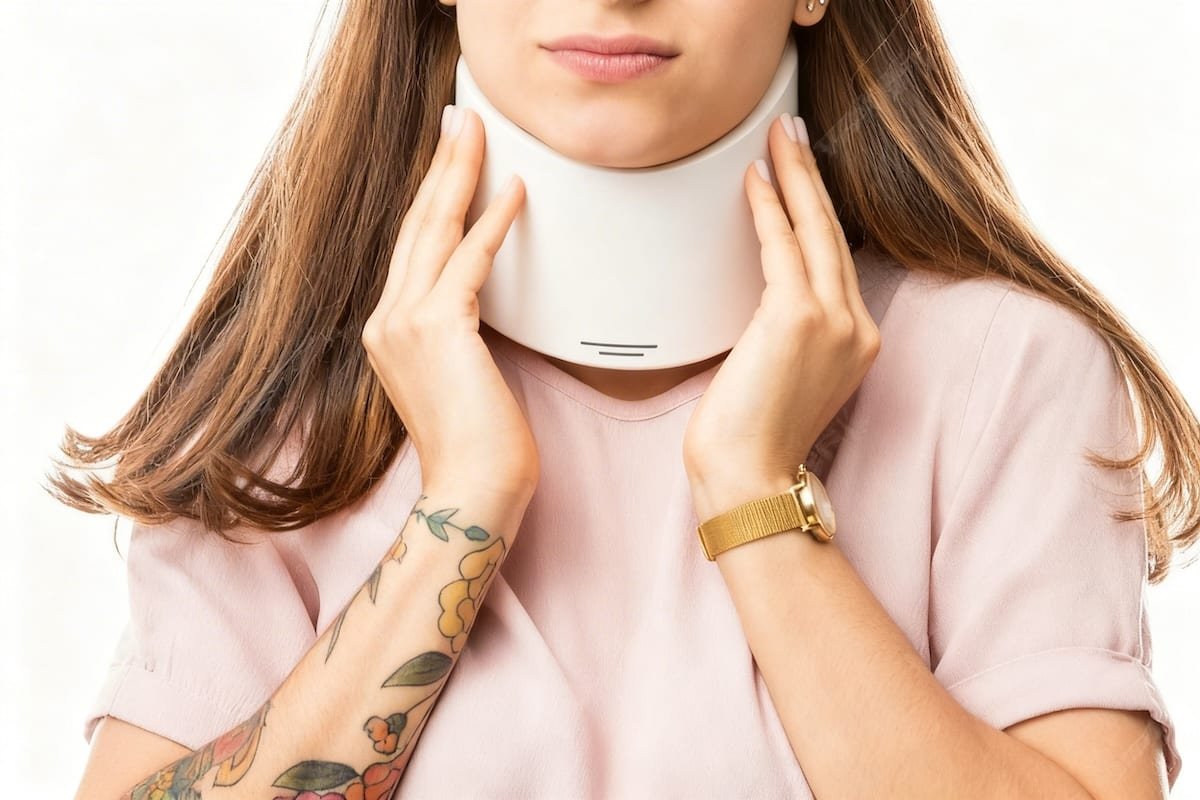
When Supports Help vs. When They HarmBracing in myofascial pain syndrome can be genuinely helpful in some situations and clearly counterproductive in others. In the short term, a well-chosen support may reduce pain, improve tolerance for movement, or make a difficult activity more manageable. In longer-term chronic MPS, however, prolonged support use can become part of the perpetuating problem if it reduces movement confidence, encourages avoidance, or replaces the active rehabilitation needed for recovery.
Many soft-tissue supports probably work less through true structural stabilization and more through proprioceptive input, warmth, cueing, and temporary symptom modification. That distinction matters. If a support is functioning mainly as a cue or comfort aid, it should usually be used like a training tool — intentionally, briefly, and with a plan to reduce reliance over time.
Problems tend to arise when a short-term support becomes open-ended. Continuous use may reduce confidence without the brace, contribute to stiffness or reduced movement variety, and in some cases encourage reduced muscular participation over time. The exact risk varies by device, body region, and diagnosis, but the general principle is consistent: the longer and more broadly a support is used, the stronger the case for reassessment.
A practical prescribing model is to treat a support the way one would treat any other clinical tool: define why it is being used, when it should be worn, when it should not be worn, how success will be judged, and what the exit strategy is. In chronic MPS, supports without reassessment plans often remain in use long after their benefit has become unclear.
Support Types & Profiles
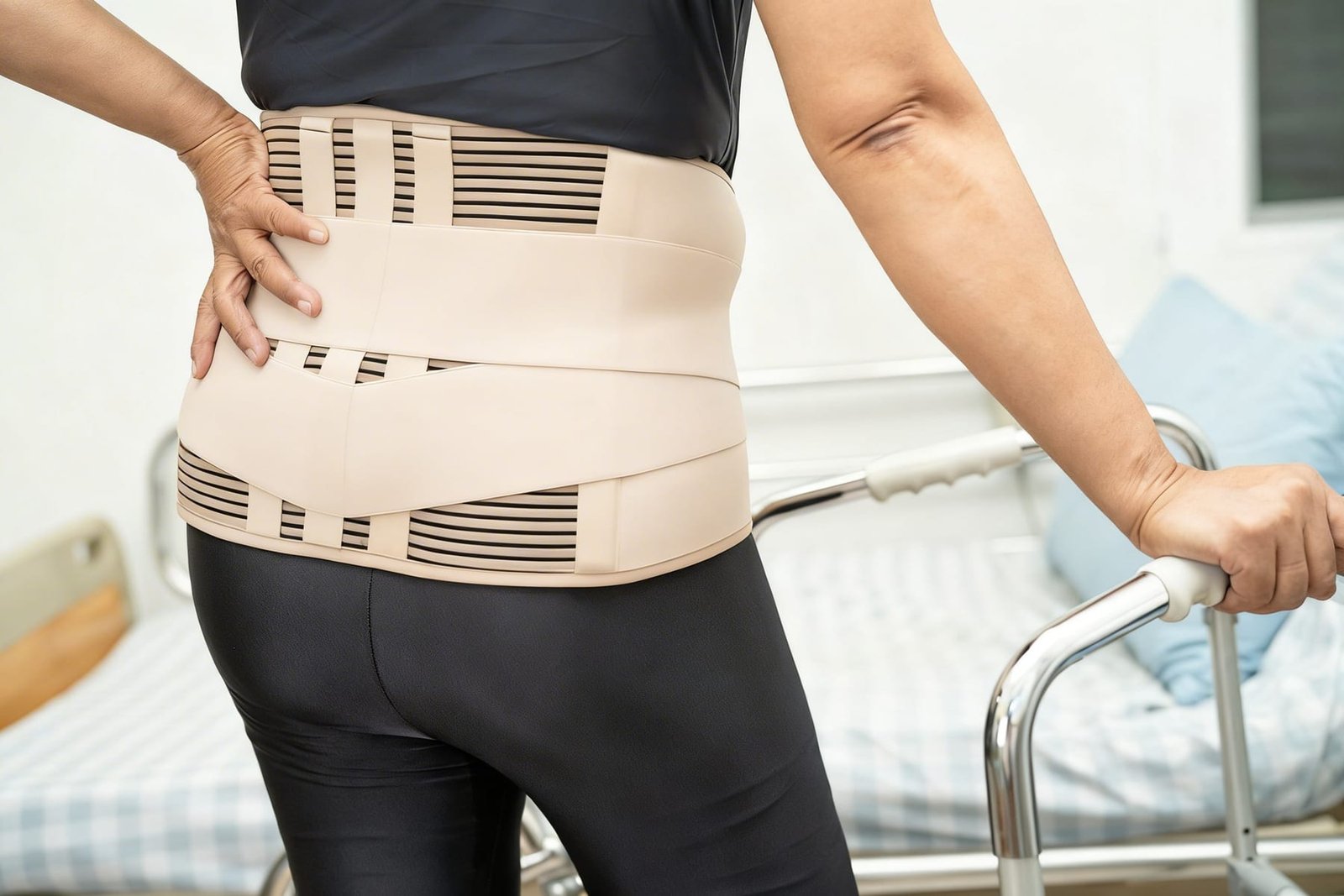
Different support types have different legitimate roles. Some are best reserved for brief acute use, some for task-specific support, and some mainly as cueing devices during retraining. The key is matching the device to the goal rather than assuming more support is always better.
Support Types
Cervical, Lumbar, Wrist, Posture, and Lower LimbCervical Collar
Lumbar Support Belt
Wrist / Hand Splints
Posture Support Devices
Knee and Lower Extremity Supports
Evidence & Clinical Guidance
The evidence base for bracing in MPS and adjacent musculoskeletal conditions is mixed and highly context-dependent. Short-term use can be reasonable in selected acute situations, especially when it helps a person tolerate movement, sleep, or a specific task. Longer-term continuous wear, by contrast, often has weaker support and greater risk of becoming counterproductive.
Evidence is generally stronger for targeted situations — for example selected occupational lifting supports, nighttime wrist splints in certain repetitive strain contexts, or short-term cueing devices during retraining — than for indefinite daily use in chronic pain. This is one reason supports are best framed as time-limited tools rather than default long-term solutions.
A support is most useful when its purpose is clear, its use is limited, and its reduction is planned from the start.
Acute Use
Task-Specific
Retraining Role
Appropriate Use Decision Guide
These four decision frameworks help determine whether a support still has a useful role, whether fit or wear pattern needs adjusting, and when step-down should begin. The aim is not to keep people in braces longer — it is to use supports more intelligently and reduce reliance when appropriate.
Acute vs. Chronic MPS Assessment
Fit and Sizing Assessment
Muscle Atrophy Risk Assessment
Weaning Readiness Assessment
Use & Weaning Protocols
Most appropriate bracing strategies in MPS fall into four broad patterns: brief acute protection, task-specific use, short-term proprioceptive cueing, and gradual weaning from supports that are no longer clearly helping. In chronic MPS, many patients will benefit most from the weaning and retraining pathway rather than escalation of support use.
Weaning Protocol
Gradual Step-Down FrameworkAcute Phase Protective Use
- Cervical collar: if used after acute injury or severe flare, it should usually be brief and paired with early reassessment rather than open-ended wear
- Lumbar support: more appropriate for selected heavy tasks than for continuous day-long use
- Wrist splint: often more useful at night or during specific aggravating tasks than as all-day wear
- Document why the support is being used and what would signal that it is time to reduce or stop it
- Discuss the likely weaning plan early, before the support becomes part of daily identity or routine
Occupational and Activity-Specific Use
- Lumbar belt: consider task-specific use during heavier lifting rather than all-day use
- Wrist brace: may be helpful during selected repetitive work periods, with regular breaks out of the device
- Shoulder or upper-limb support: if used, reserve for defined aggravating tasks rather than constant background wear
- Track actual wear time — once support use expands beyond the original task, reassessment is needed
- Occupational or ergonomic adjustment should ideally reduce long-term reliance on the device
Proprioceptive Retraining Programme
- Posture shirt or support: use briefly as a cue during active retraining rather than passive long-duration wear
- The likely value is proprioceptive and behavioral, not true structural correction
- Reduce support time gradually as the person can reproduce the desired pattern independently
- Pair the cue with exercise, motor retraining, and movement practice rather than relying on the device alone
- The long-term goal is not better brace tolerance, but less need for the brace
Structured Weaning Protocol
- Begin by removing the support during lower-demand activities while keeping it for the most aggravating tasks only
- Reduce wear time progressively rather than waiting for a single “perfect” day to stop altogether
- As the brace is reduced, increase the role of strengthening, motor control, and confidence-building movement
- Expect some discomfort or uncertainty during weaning — that does not automatically mean the process is failing
- If symptoms worsen meaningfully or function drops, reassess rather than simply returning to indefinite brace dependence
- Weaning generally works best when paired with an active rehabilitation plan
Red Flags & Contraindications
Most support decisions in MPS are about good timing, fit, and appropriate duration rather than dramatic contraindications. Still, some situations require specialist input or immediate removal of a device already in use.
Structural instability requiring formal bracing (for example significant ligament injury, post-surgical instability, or known specialist-diagnosed instability)
These situations require specialist assessment and a formally prescribed orthotic plan rather than casual OTC brace selection.
Skin breakdown under the brace
Remove the brace and reassess fit, pressure, and skin integrity. Persistent redness, blistering, or skin injury should not be ignored.
Neurological symptoms developing under or around a brace
New numbness, tingling, weakness, or unusual compression symptoms may indicate poor fit, excessive pressure, or an alternative problem requiring evaluation.
Patient reports they “cannot function without the brace” after prolonged use
This can reflect dependency, fear of movement, reduced confidence, or reduced muscular tolerance. It usually calls for a structured reassessment and a more deliberate step-down plan.
Supports can be useful short-term tools, but they are usually not long-term solutions for myofascial pain.
For many soft-tissue supports, the main effect is likely cueing, confidence, or short-term symptom relief rather than true structural correction.
The longer a brace is worn continuously, the more likely it is that deconditioning, dependency, or fear of movement will become part of the problem.
If a support is prescribed, it should usually have a clear reason, a defined pattern of use, and a plan for reassessment or weaning.
One of the most common mistakes in chronic myofascial pain is continuing a support long after its short-term role has passed.